Miguel Abreu Gallery is pleased to announce Sequence 10: one work, one or two weeks, an exhibition wherein, over the course of eight weeks, a single artwork will be on view at our 36 Orchard Street space for the duration of one or two weeks. This sequencing of objects by various artists articulated over time constitutes a break from the traditional group show in which works are relationally installed in space rather than time.
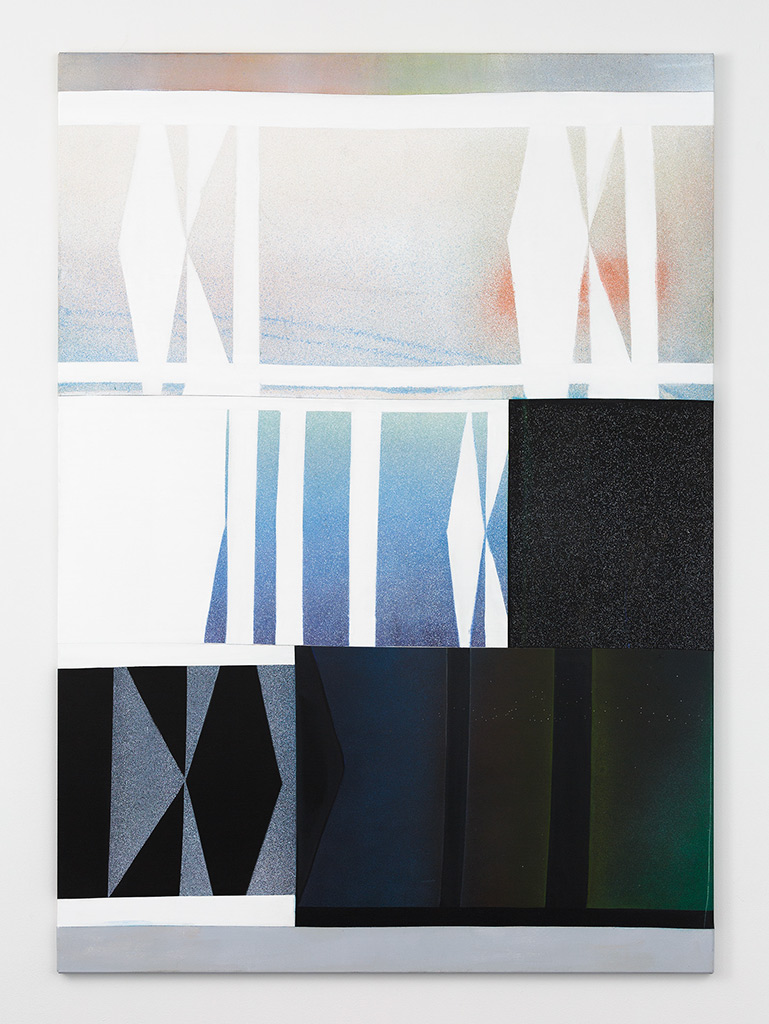
This tenth iteration of the exhibition began with a new painting by Blake Rayne, and was followed by the artist’s Dog Ear 2, from his ongoing series of folded, painted, and sewn assemblages. The third work in the show was Rayne’s monumental 2018 painting, Skull Anabranch. To conclude the exhibition, the fourth and final work on view is Rayne’s RA: 15h 17m 31.222s DEC: 31° 17m 31.620s.
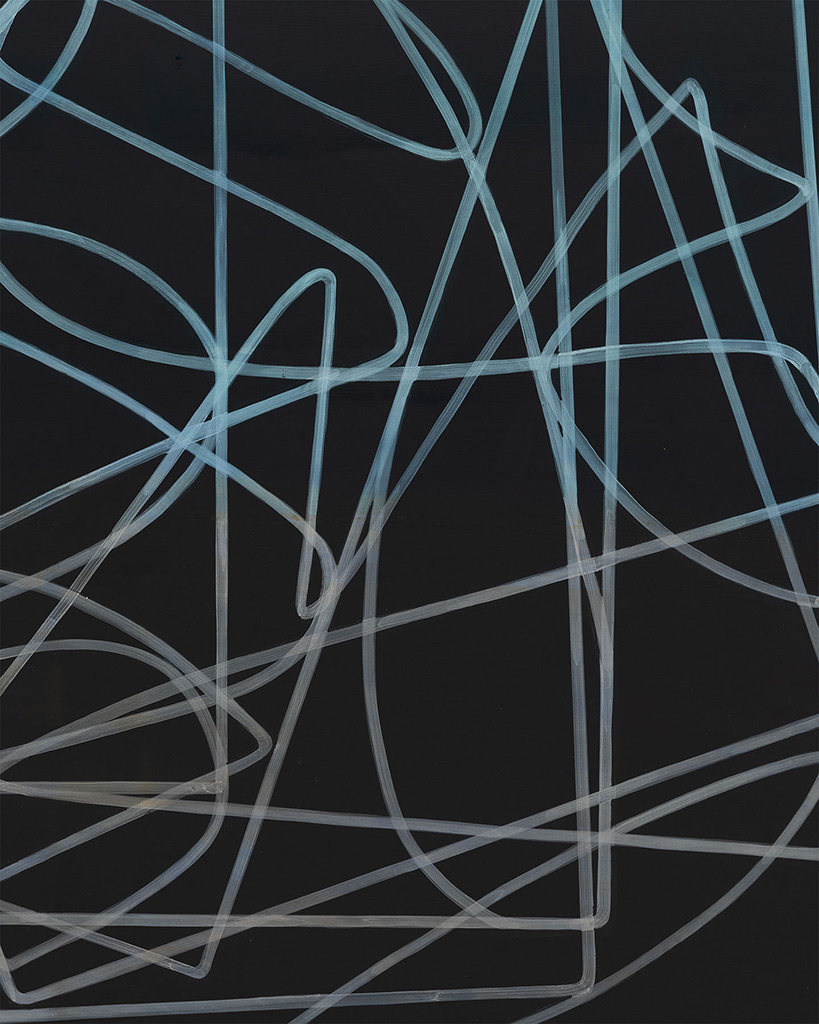
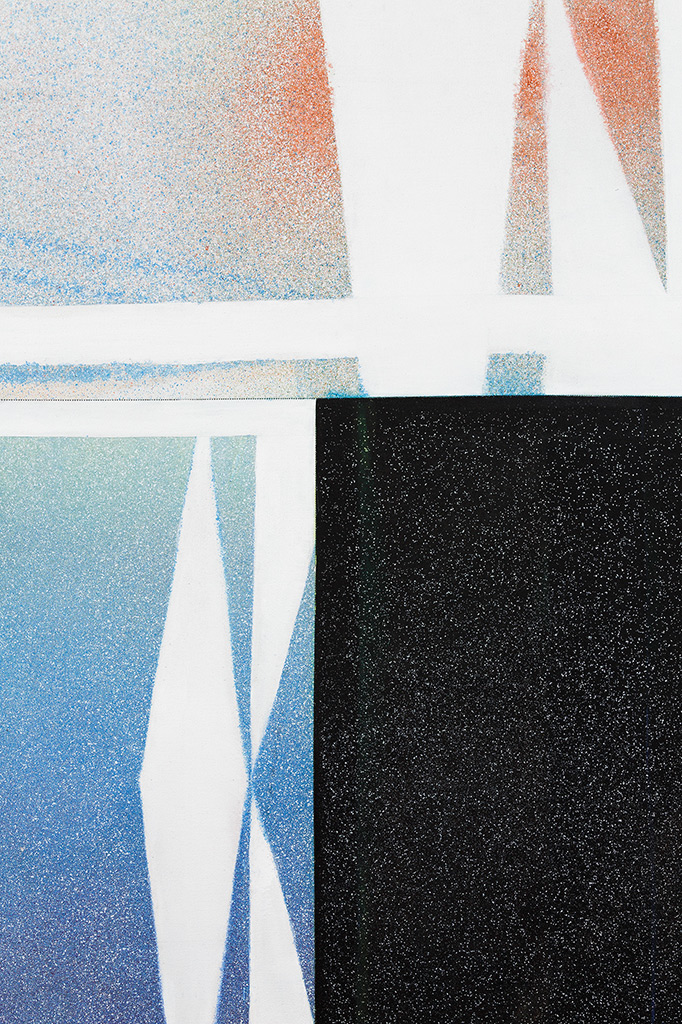
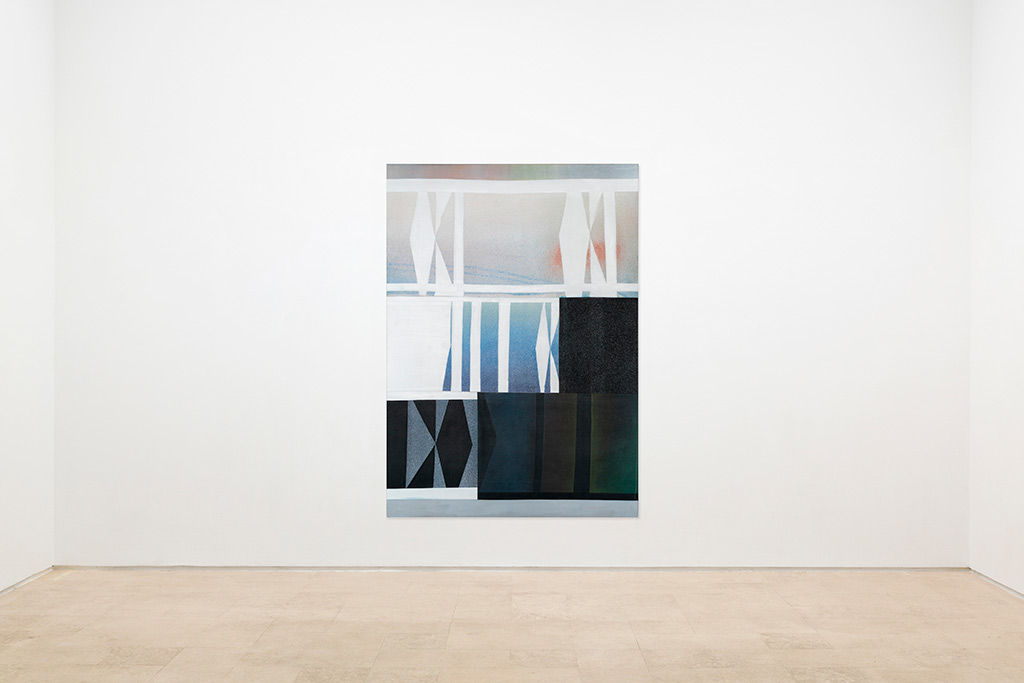
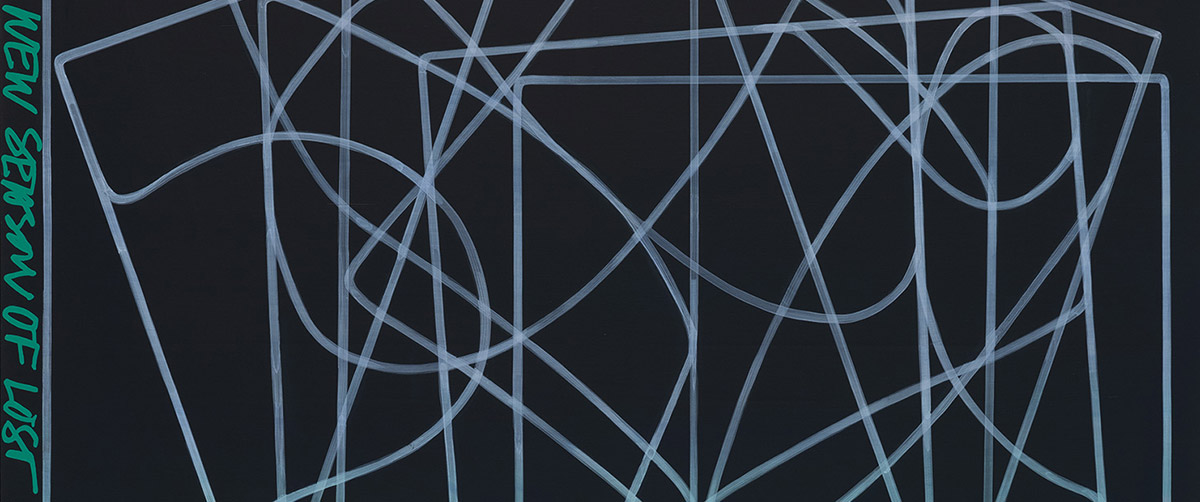
4. RA: 15h 17m 31.222s DEC: 31° 17m 31.620s
Each painting in this series by Blake Rayne is considered a “scene” and therefore is composed of a series of “shots”—which can be understood as a line that ends where it started. The seven rectangles, or cell phone screens, constitute containers for the drawings representing each day of the week.
The painted film of translucent color—a glaze—is an allover application of purple, green, and orange urethane that establishes a protective film and a display surface of another material. The top left corner of each work is printed with an image of text in oil paint: “a whole new season of lost,” which points to the eponymous TV series.
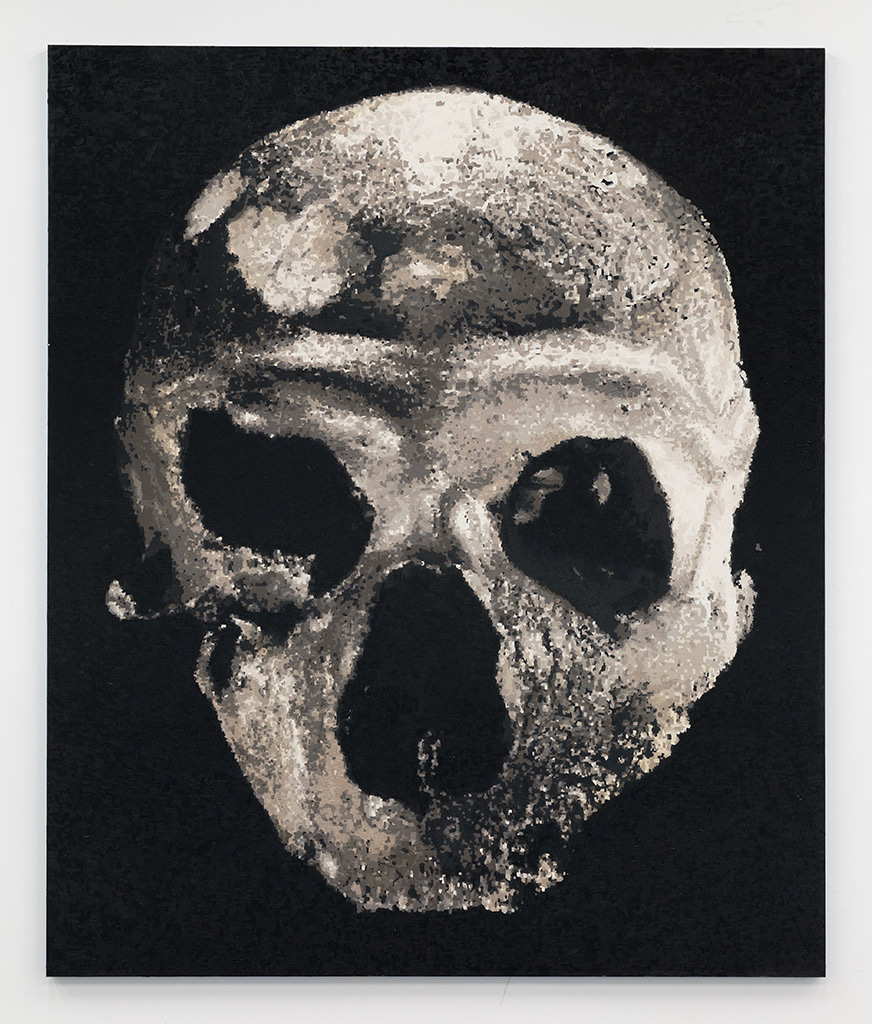
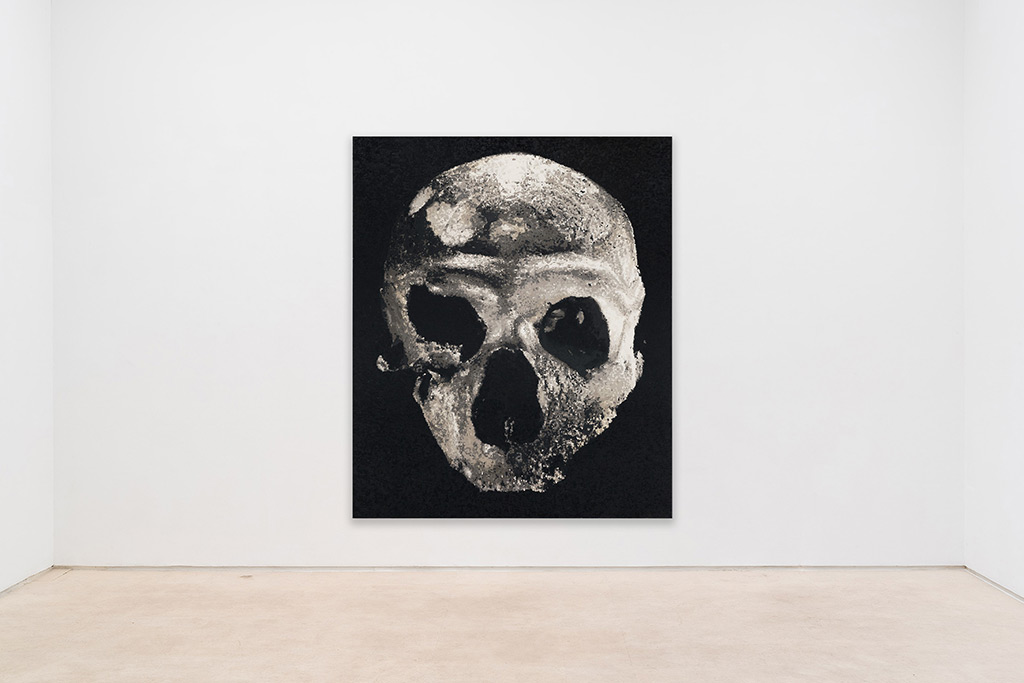
3. Skull Anabranch
May 20 – June 5
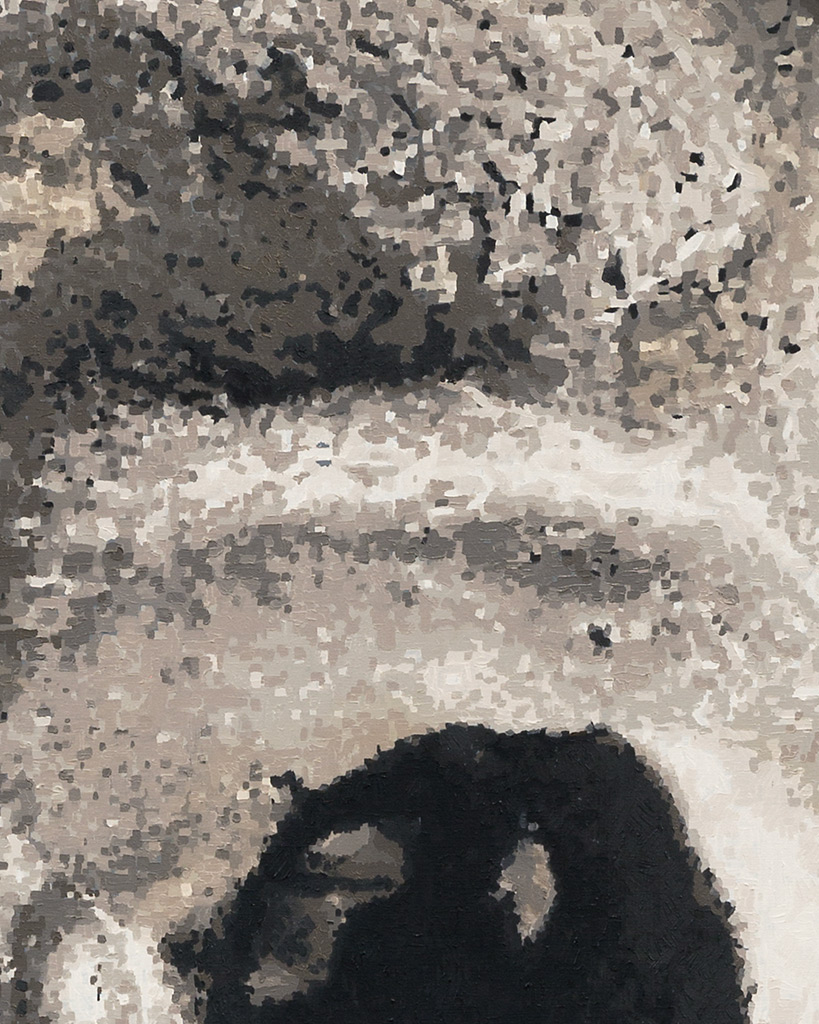
Skull Anabranch is part of a group of paintings depicting widely circulated pictures of archaeological reconstructions of Neanderthal skulls. Approaching the skulls as objects of discovery, Rayne reconsiders the relationship between the modernist myth of primitivism and the persisting presumptions of 20th century art-making. As the artist provocatively puts it, “Today, all paintings are skulls.” With that in mind, Rayne reanimates the picture plane by displacing the pixel structure of the source image, and painstakingly replacing it with an all-over network of minimal painterly marks.
2. Dog Ear 2
April 29 – May 17
In Dog Ear 2 (2020), Blake Rayne continues his exploration of the fold as both a material and conceptual device. Strips of canvas are folded, sprayed, painted, sewn, and stretched into rhythmic segments that reflect the temporal disjunctions embedded in the act of folding—interruptions, overlaps, and remainders. The resulting composition functions not just as a surface but as a temporal register, marked by creases that evoke the mnemonic gesture of a dog-eared page. Here, abstraction becomes a medium for resisting the uniform flow of standardized time, offering instead a heterogeneous field of delays, ruptures, and deferrals.
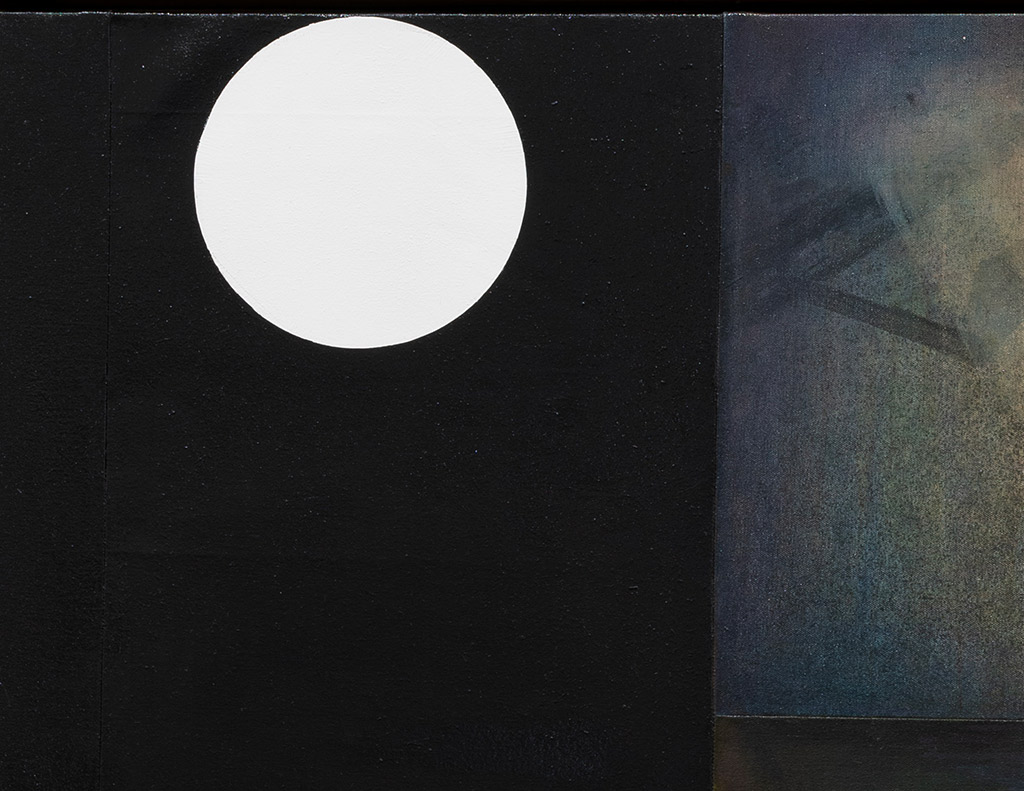
1. Untitled Painting
April 1 – 24
In his latest series of works, which Blake Rayne refers to as “composite paintings,” the artist sews together sections of preexisting painted canvas into newly constructed pictures. In Untitled Painting (2025), a black monochrome rectangle with a white disk on the upper left of the composition reads as a geometric absolute—a divine abstraction—while a loose and shifting line of cloth at the bottom offers a sample of perpetual transformation positioned below a stooped figure gathering materials. The outlined laboring body comes from Jean-François Millet’s depiction of a gleaner, which can be considered an allegory of contemporary painting itself. Drawn in pencil, undated and removed from his notebook, framed and in the Louvre collection, it was later utilized as an orthogonal structure by Van Gogh in his painting, The Reaper (after Millet).
The constructivist aim of Rayne’s work is faded by an overall layer of darkening varnish, which brings an effect of dusk to the viewing experience. The gleaner, painted in black strokes, intensifies the distinctive shadowy atmosphere of the work.
Blake Rayne (b. 1969, Lewes, Delaware) lives and works in New York. He attended the California Institute of the Arts, received a fellowship from the American Acadamy in Berlin (2010), and has taught at Columbia University’s School of Visual Arts.
In 2016-17, Cabin of the Accused, the first survey exhibition of Rayne’s work, was presented at the Blaffer Art Museum in Houston, Texas. Recent solo exhibitions include Archives I: Blake Rayne (Emanuela Campoli, Paris, 2024), Bad Maps (Galeria Nuno Centeno, Porto, 2023), Blake Rayne (1301PE, Los Angeles, 2022), Dog Ears (Miguel Abreu Gallery, New York, 2020–21), Yogurt Cinema (A Certain Lack of Coherence, Porto, 2019), Brother Ass (Central Fine, Miami, 2019), DOGSKULLDOGS (Miguel Abreu Gallery, New York, 2018), and Carbon Days (Nuno Centeno, Porto, 2018), among others. His work was included in L’Atelier du Sud at the Fondation Vincent van Gogh, Arles in 2023–24, Collected by Thea Westreich and Ethan Wagner at the Whitney Museum of American Art in 2016, Chat Jet: Painting <Beyond> the Medium (Künstlerhaus, Graz, 2013), and in numerous group shows including Bergen Kunsthall, The Kitchen, SculptureCenter, Artists Space, Gladstone Gallery, Gagosian Gallery, Reena Spaulings, Greene Naftali, and American Fine Arts.
Tense and Spaced Out: Polar Nights, Glacial Chaos, and the Ecology of Misery, a monograph covering the last decade of the artist’s output, with texts by John Kelsey, David Lewis, Jaleh Mansoor, Laura Owens, Sean Paul, and Javier Sánchez Martínez, was published by Sequence Press/Blaffer Art Museum/Sternberg Press in 2017. Almanac, a collaboration with Three Star Books and Westreich/Wagner was published in 2013.
Rayne’s work is held in the collections of the Museum of Modern Art, New York; the Whitney Museum of American Art, New York; San Francisco Museum of Modern Art; FRAC – Fonds Regional d’Art Contemporain Poitou-Charentes, France; the Pinault Collection, Paris; the Portland Museum of Art; and the Institute of Contemporary Art, Miami, among others.