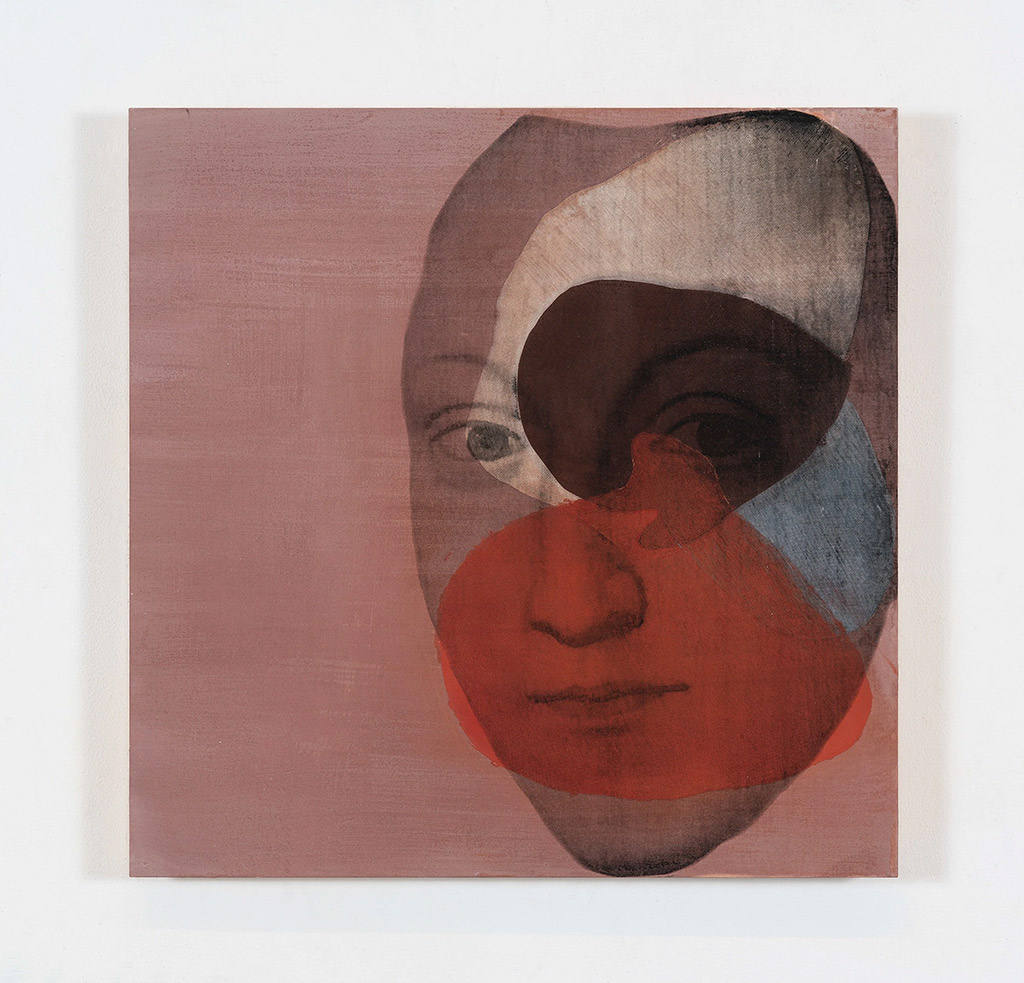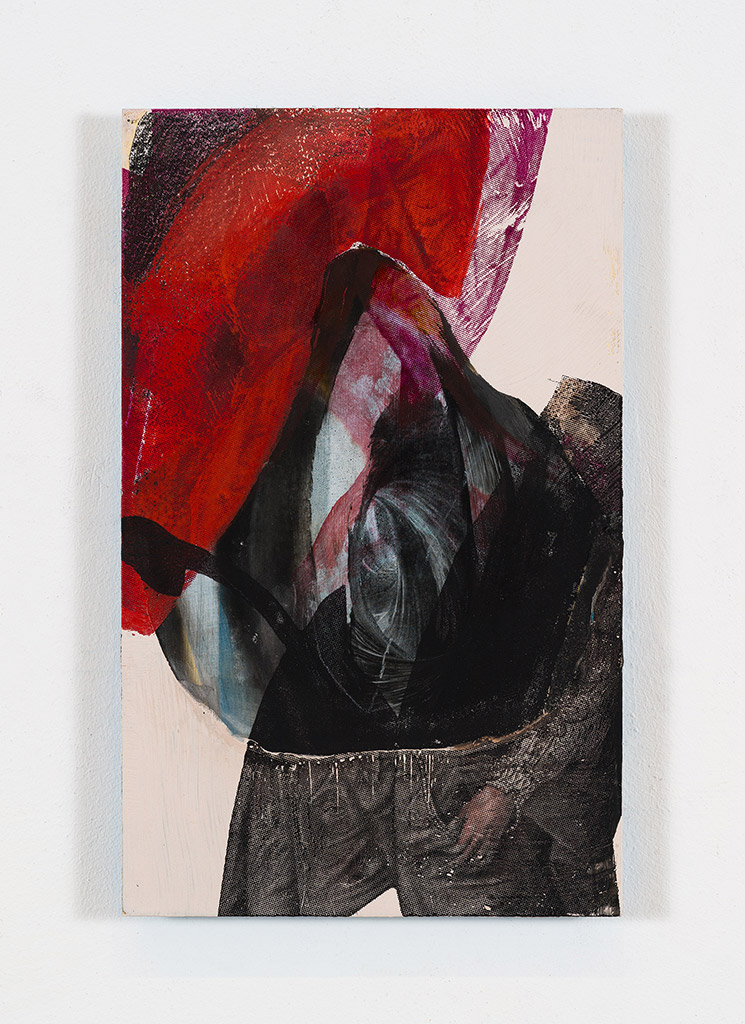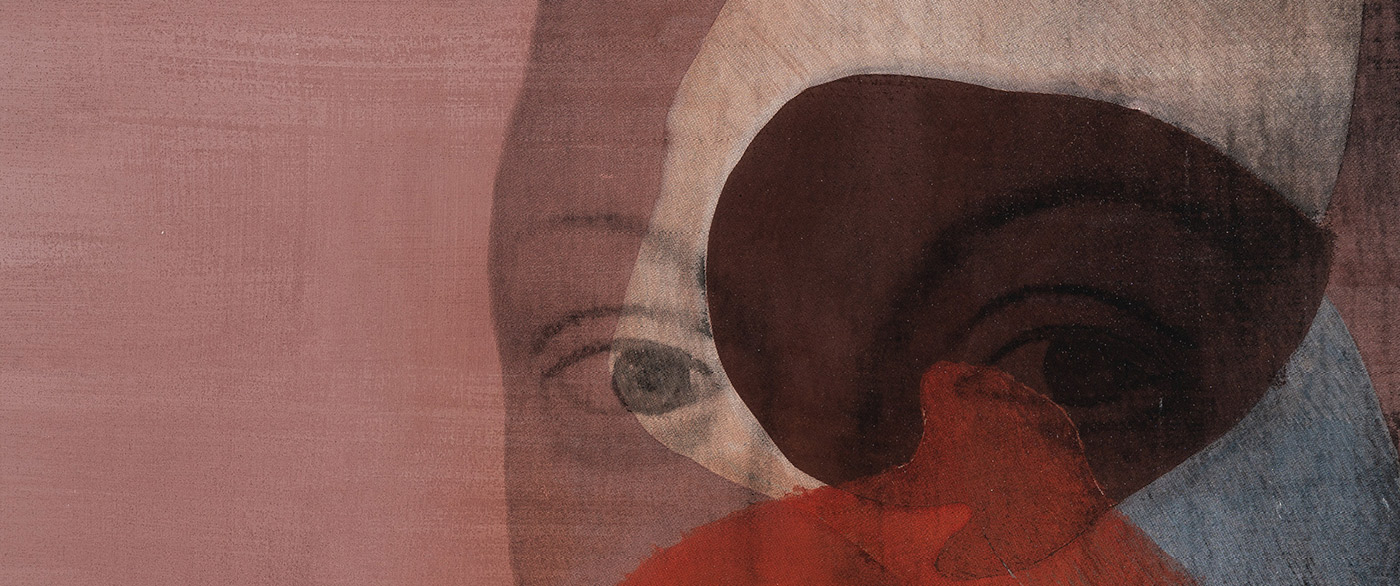
For me, painting has always been about that paradox: how an image can survive its maker and its subject, carrying a presence that feels alive even when everyone involved is long gone. That’s what this portrait [Portrait L] does. It collapses time. It’s uncanny and moving. And, honestly, it makes me want to continue painting portraits.
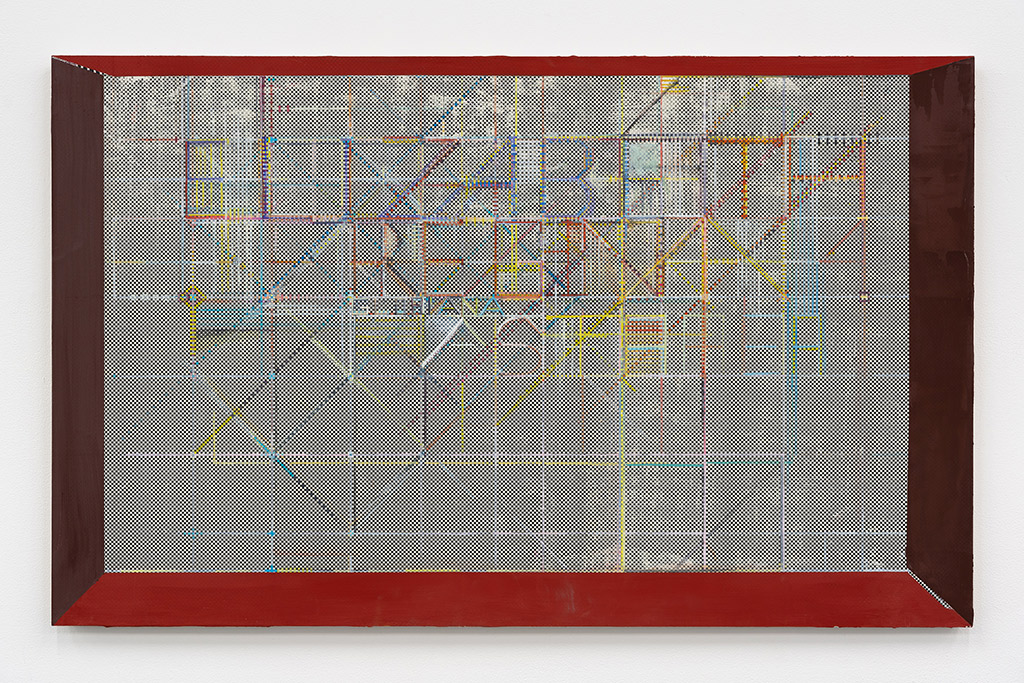
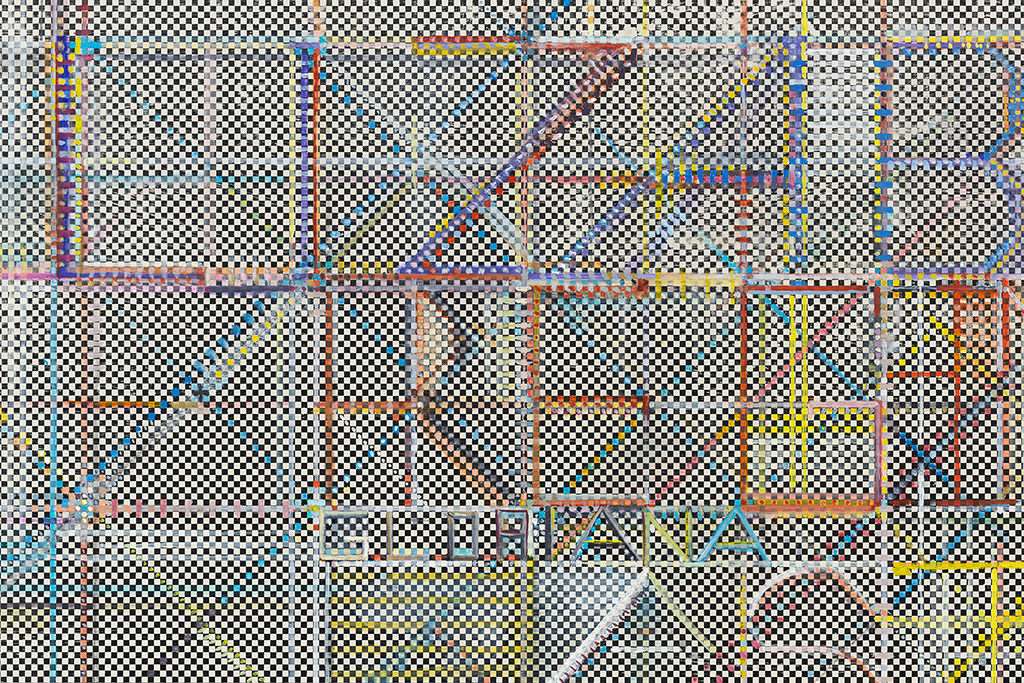
In 2001, I began to call my exhibitions “chapters” as a way to organize and bind, as if zoomed out over time. This shift in terms was accompanied by a uniformity in the paintings’ support: gessoed plywood panels that adhere to the nesting geometry of the golden section. This method enables a single painting to be understood as part of the overarching whole.
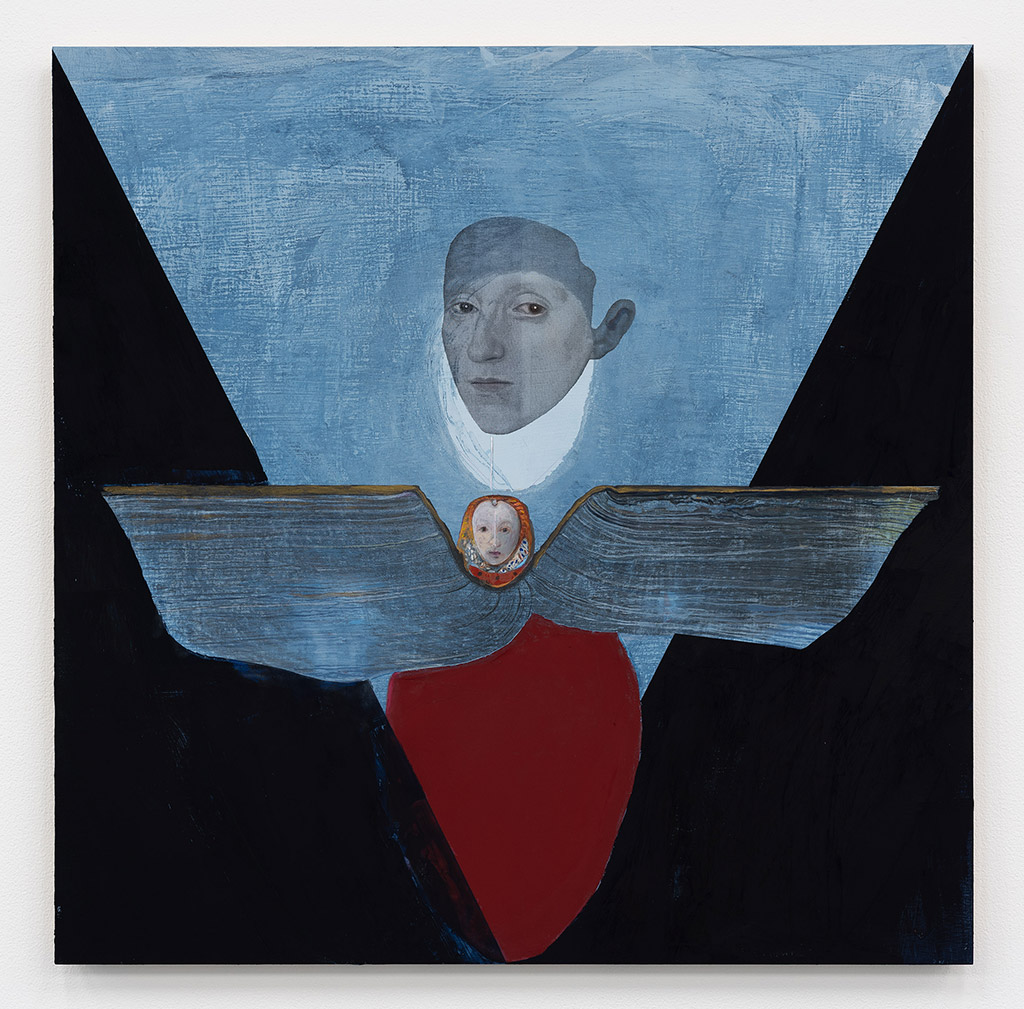
The Hieroglyphic, Chapter 0.4 is my 40th chapter and my first showing in London since 2008. For this new chapter, I pounced on my lifelong love and obsession with Queen Elizabeth I. Elizabeth both appreciated and influenced the politics of her portraits. In 1560, she drafted a proclamation instructing her “portraiture sargent payntors” that no image of her was to be made unless it conformed to an official template to be approved by her and distributed throughout her realm.
Looking at hundreds of reproductions of her image in paintings and engravings, on coins and statues, I became interested in one recurring pattern—showing her face in three-quarter view. While clothes and background change dramatically from work to work, the face remains mask-like, with only the direction of her gaze shifting. Rarely does one have the feeling of knowing her from her image.
One allegorical painting struck me deeply. It depicts Elizabeth in the role of Paris, about to select which of the three goddesses will win the golden apple. Would she choose Aphrodite and Eros, representing love? Or would she choose Hera, goddess of marriage, or Athena, goddess of wisdom? Luckily, Elizabeth always took her time choosing. After all, in The Hieroglyphic (The Judgment of Elizabeth), Chapter 0.4, she holds not an apple but the globe.
— R. H. Quaytman
Expanded in its second year in terms of both number of artists and scope of presentations, Studio, curated by Sheena Wagstaff, highlights Frieze Masters’ commitment to living practice in dialogue with historical art. By focusing on artists’ place of making, it reflects the idea of the past informing the present moment of creation in an object for the future.
R. H. Quaytman (b. 1961, Boston) lives and works in Guilford, CT. Recent one-person exhibitions include Ones, Chapter 0.2, Miguel Abreu Gallery, New York (2025); Glenstone Museum, Potomac, MD (2022);Modern Subjects, Chapter zero, WIELS, Brussels (2021); andThe Sun Does Not Move, Chapter 35, a two-part exhibition at the Serralves Museum, Porto (2020) and Muzeum Sztuki, Łódz (2019). Book, the second volume of Quaytman’s artist book and catalogue raisonné was recently published by Glendstone Museum.
Quaytman’s work has been featured in documenta 14 (2017); the 54th Venice Biennale (2011); and the 2010 Whitney Biennial. Other solo exhibitions have taken place at Solomon R. Guggenheim Museum, New York (2018); Galerie Buchholz, Berlin and Cologne (2018, 2011); Secession, Vienna (2017); Museum of Contemporary Art, Los Angeles (2016); Miguel Abreu Gallery, New York (2015, 2008); Tel Aviv Museum of Art (2015); Gladstone Gallery, New York and Brussels (2014, 2012); Renaissance Society, Chicago (2013); Museum Abteiberg, Mönchengladbach (2012); Kunsthalle Basel (2011); San Francisco Museum of Modern Art (2010); and Institute of Contemporary Art, Boston (2009), among others. In 2015, Quaytman was awarded the Wolfgang Hahn Prize with Michael Krebber. In 2005, she co-founded Orchard, a cooperatively-run exhibition and event space that concluded its three-year run on the Lower East Side in 2008.
Her work is held in the permanent collections of the Museum of Modern Art; the Whitney Museum of American Art; the Solomon R. Guggenheim Museum; The Art Institute of Chicago; San Francisco Museum of Modern Art; Museum of Fine Arts, Boston, Tate Modern, London; Centre Pompidou, Paris; Museo Reina Sofia, Madrid; Stedelijk Museum Amsterdam, Glenstone Museum, Potomac, MD; and Pinault Collection, among others.