INQUIRIES
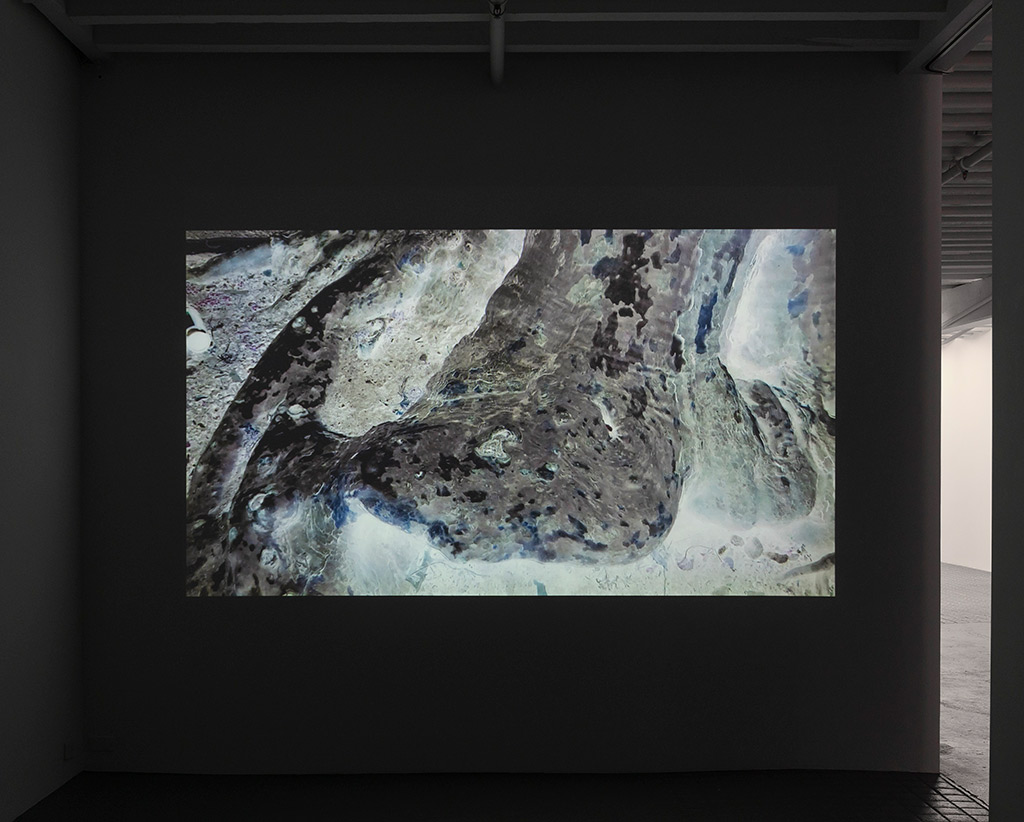
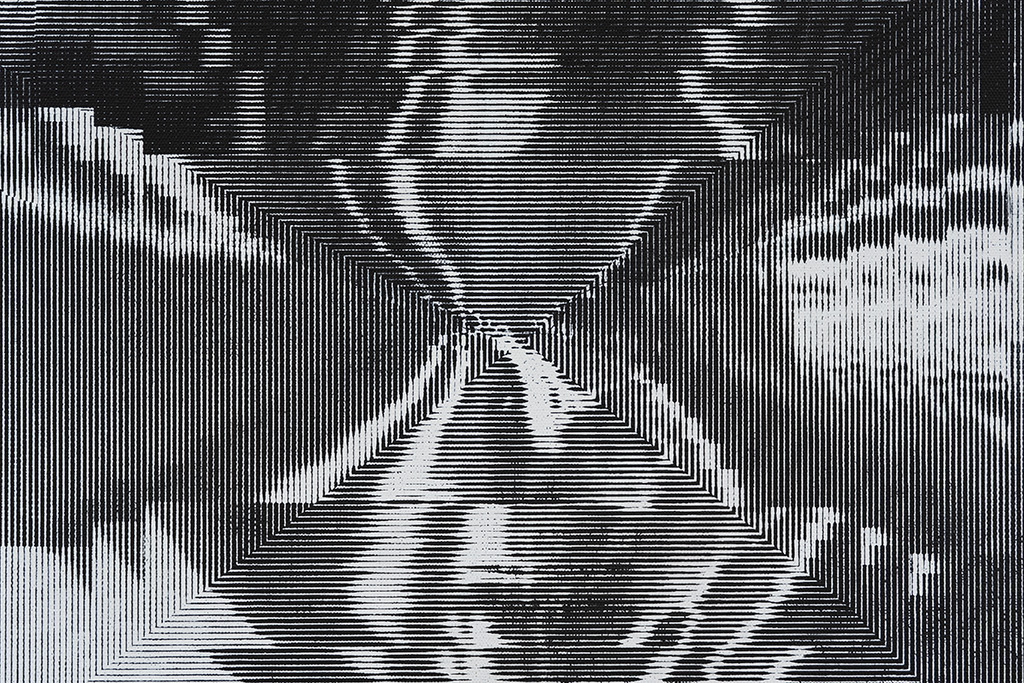
with KEN JACOBS, Other Urban Lives, 2023 (DV, 5:55 min.)
OPENING RECEPTION WITH PERFORMANCE, FRIDAY, MAY 15, 6–8PM
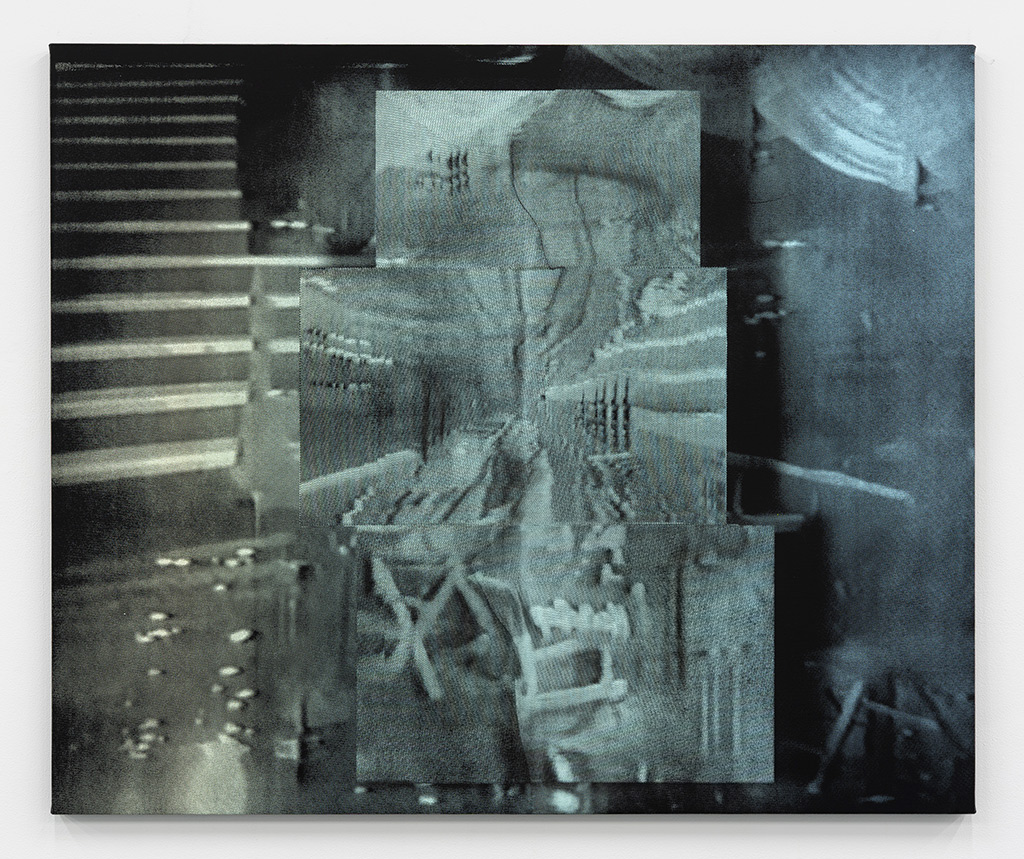
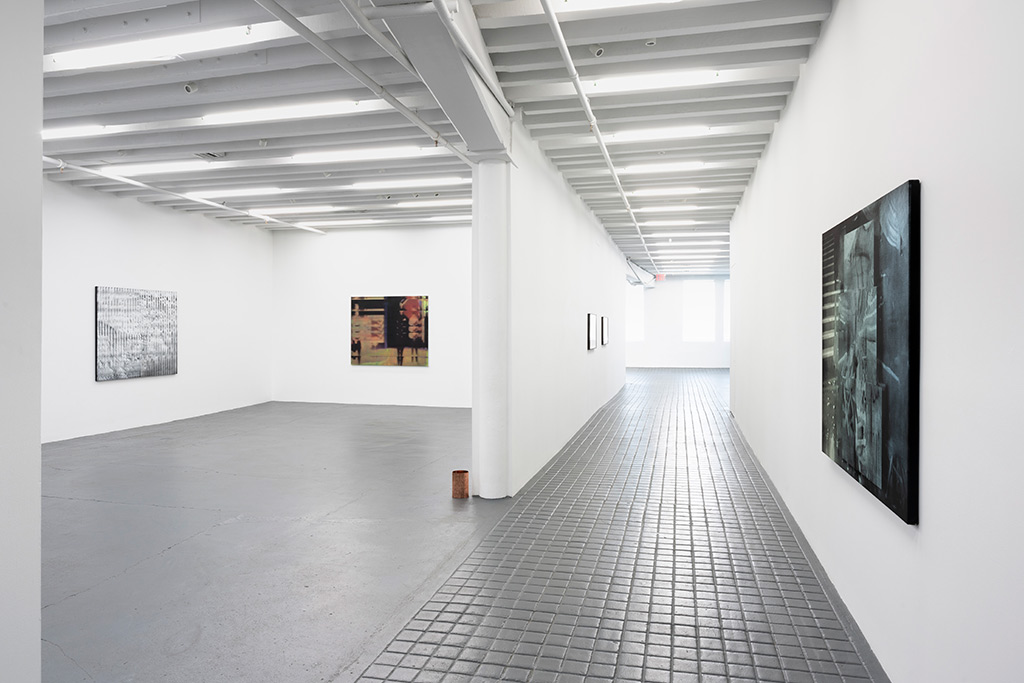
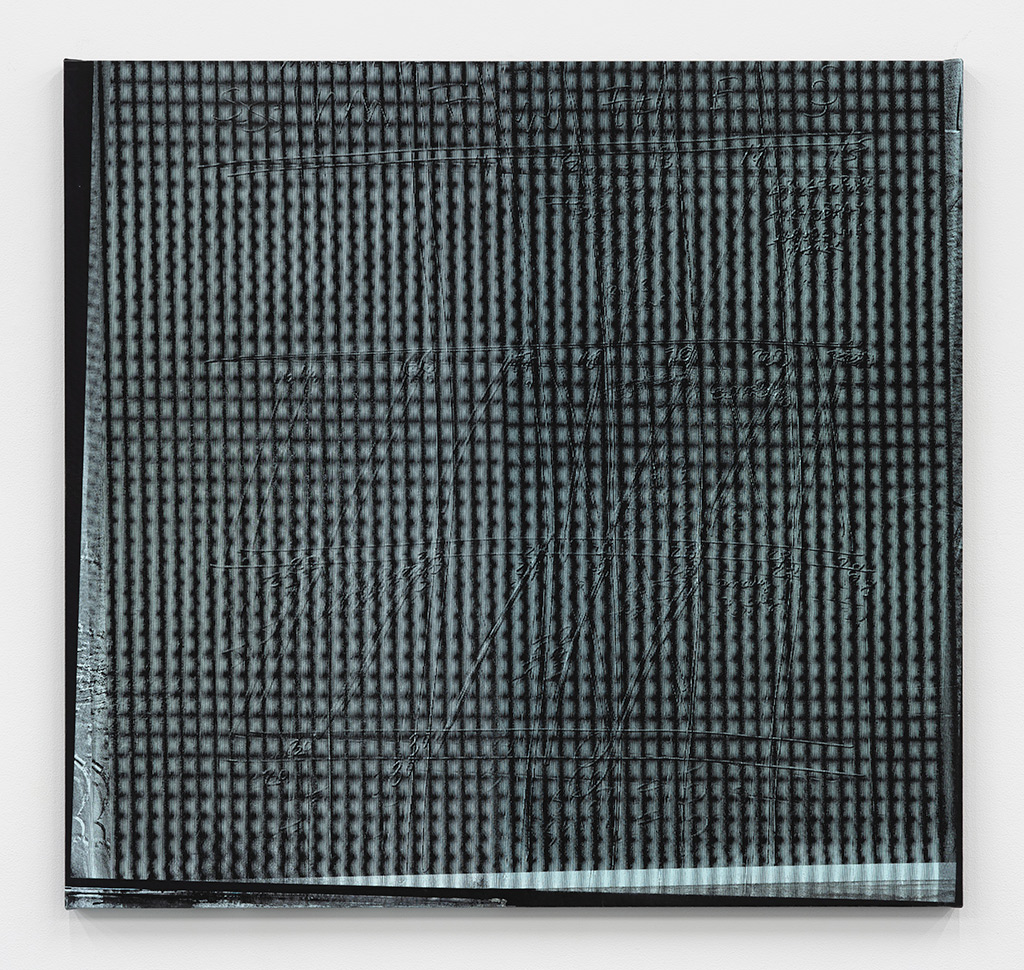
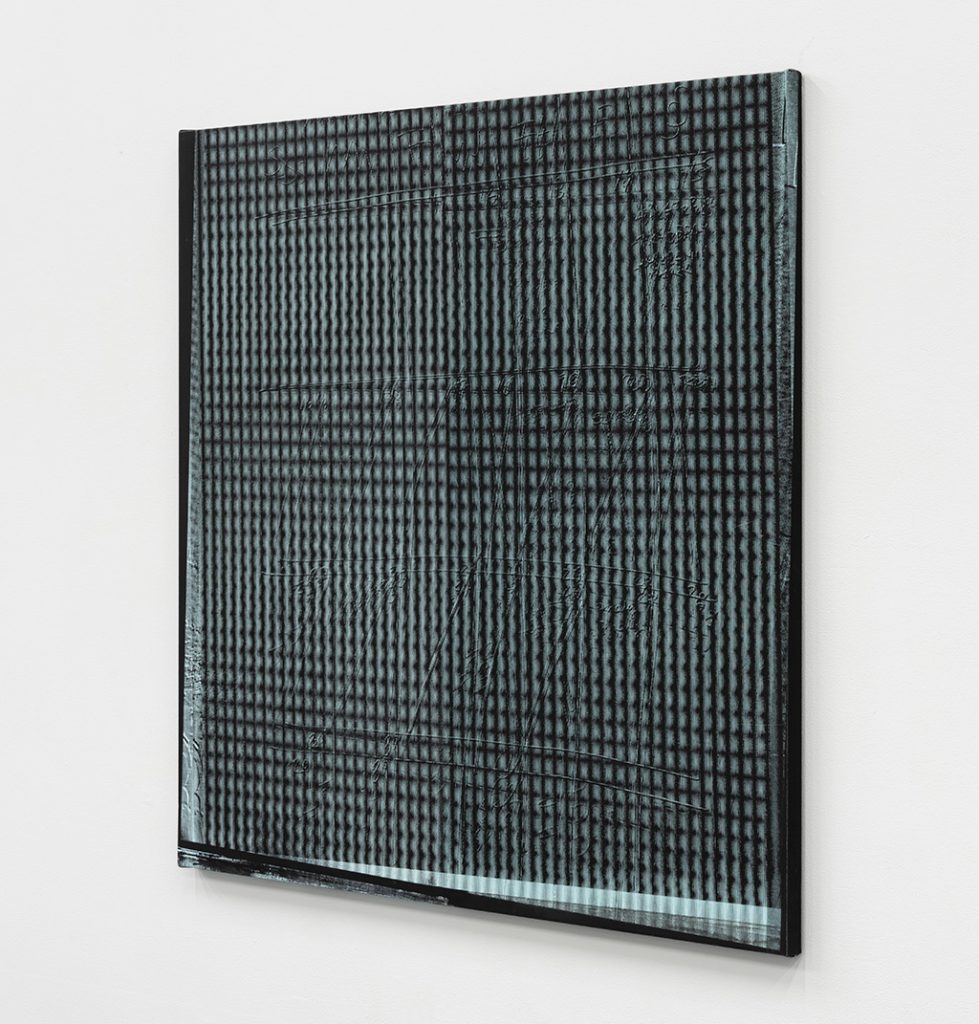
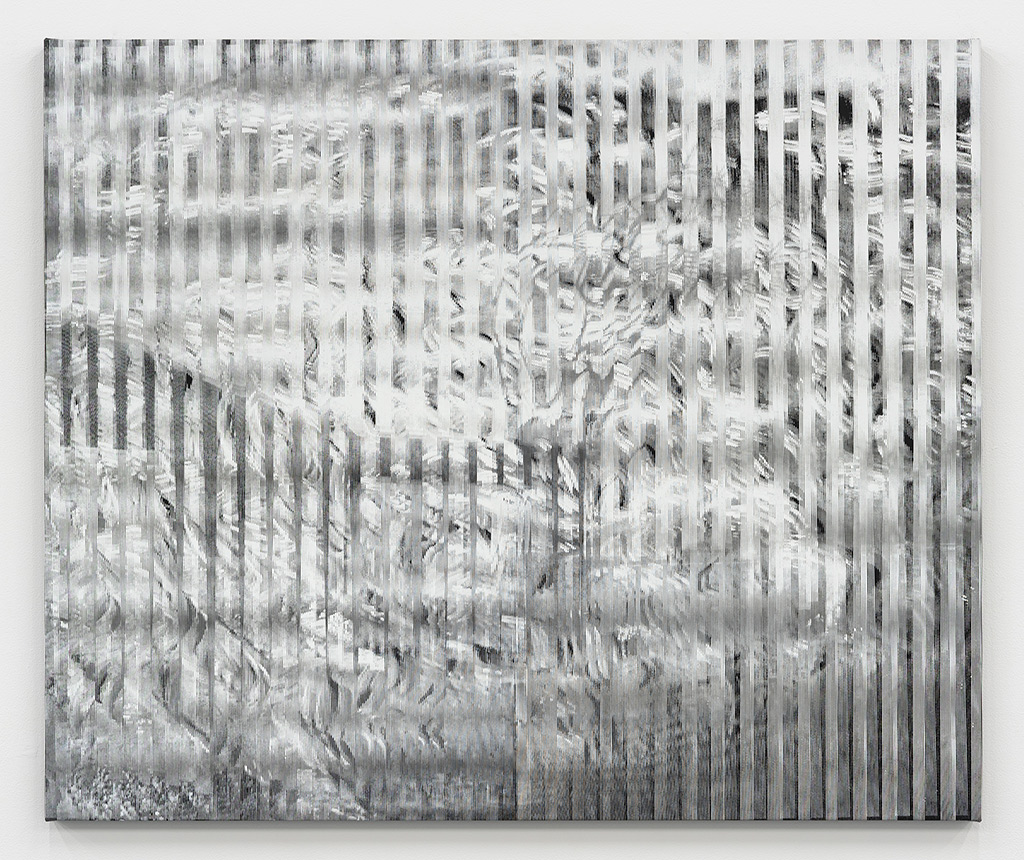
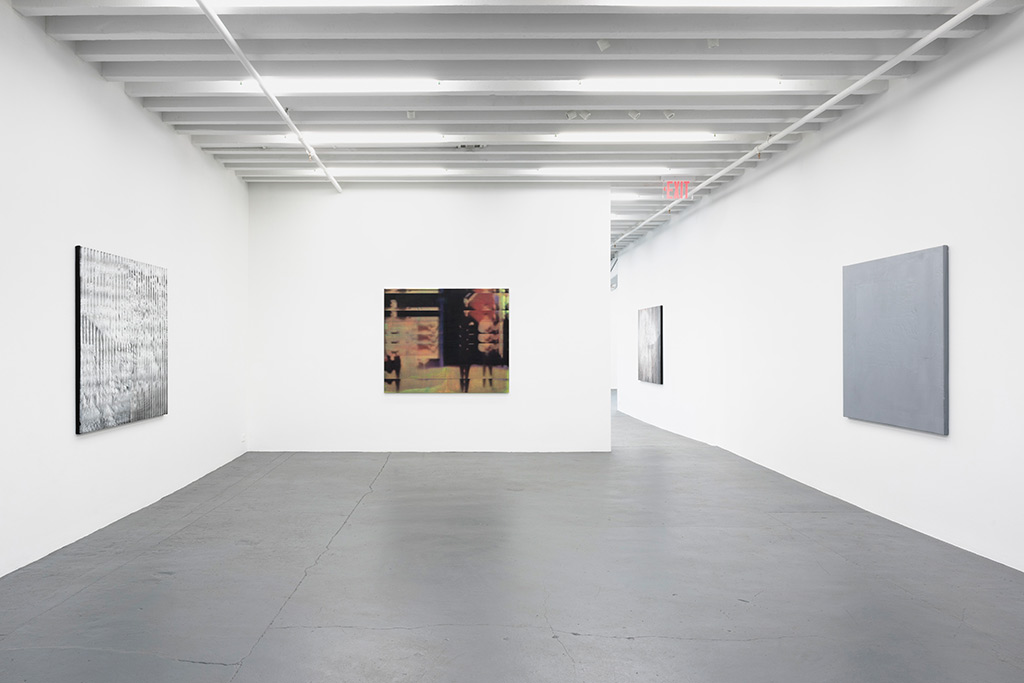
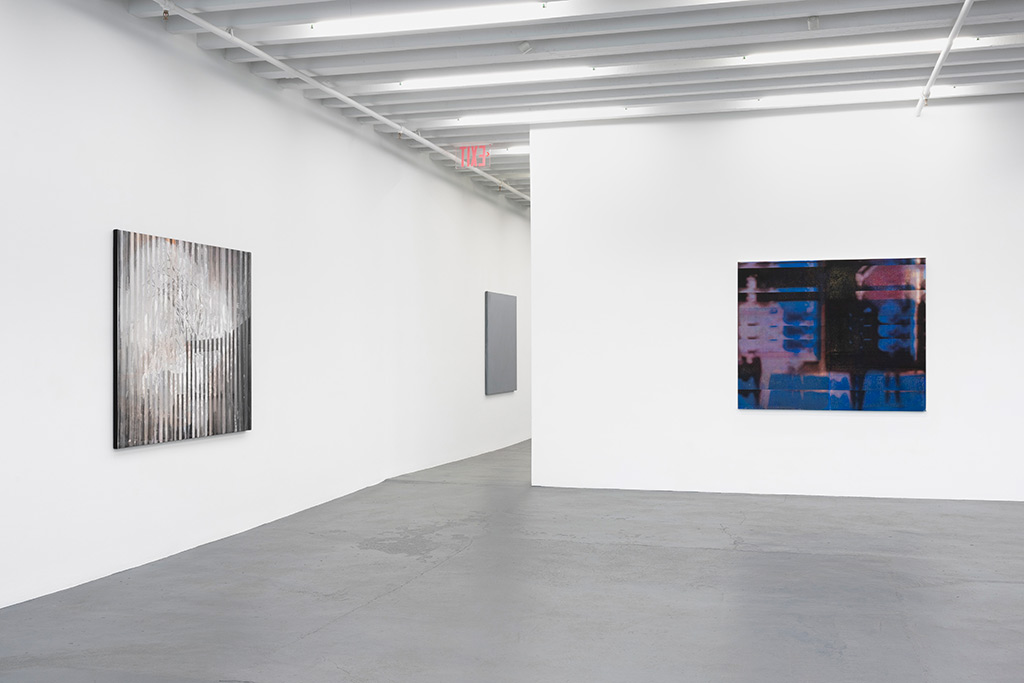
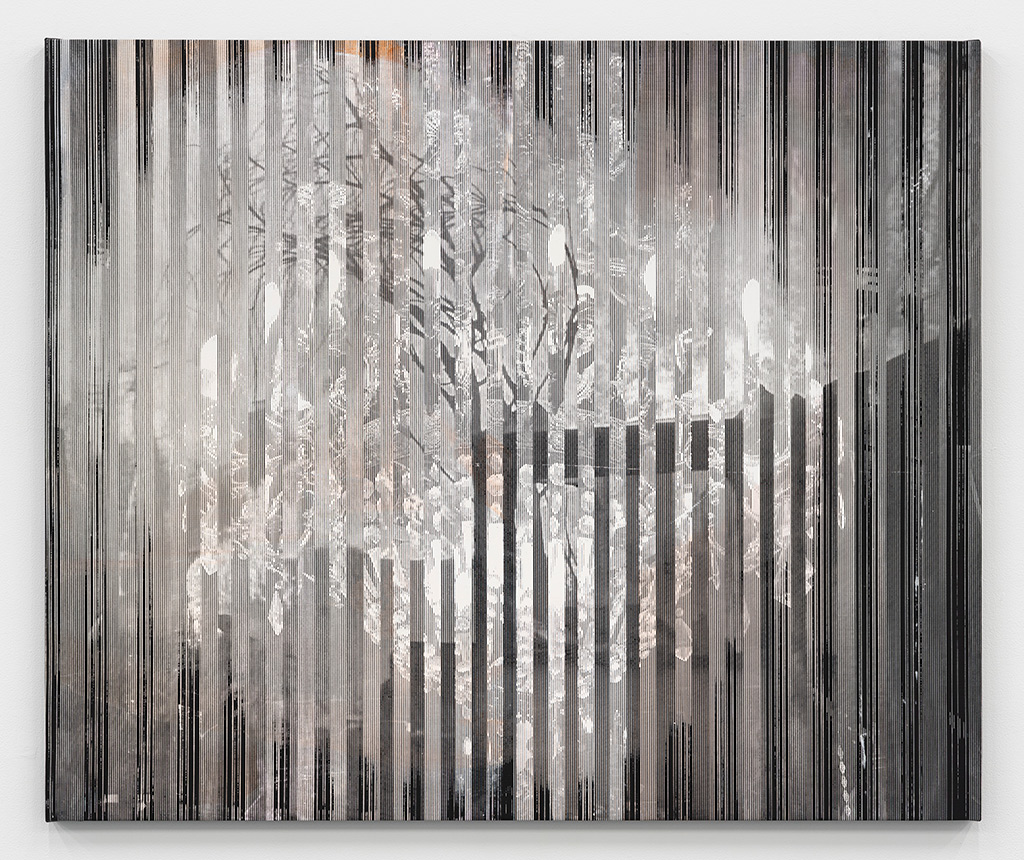
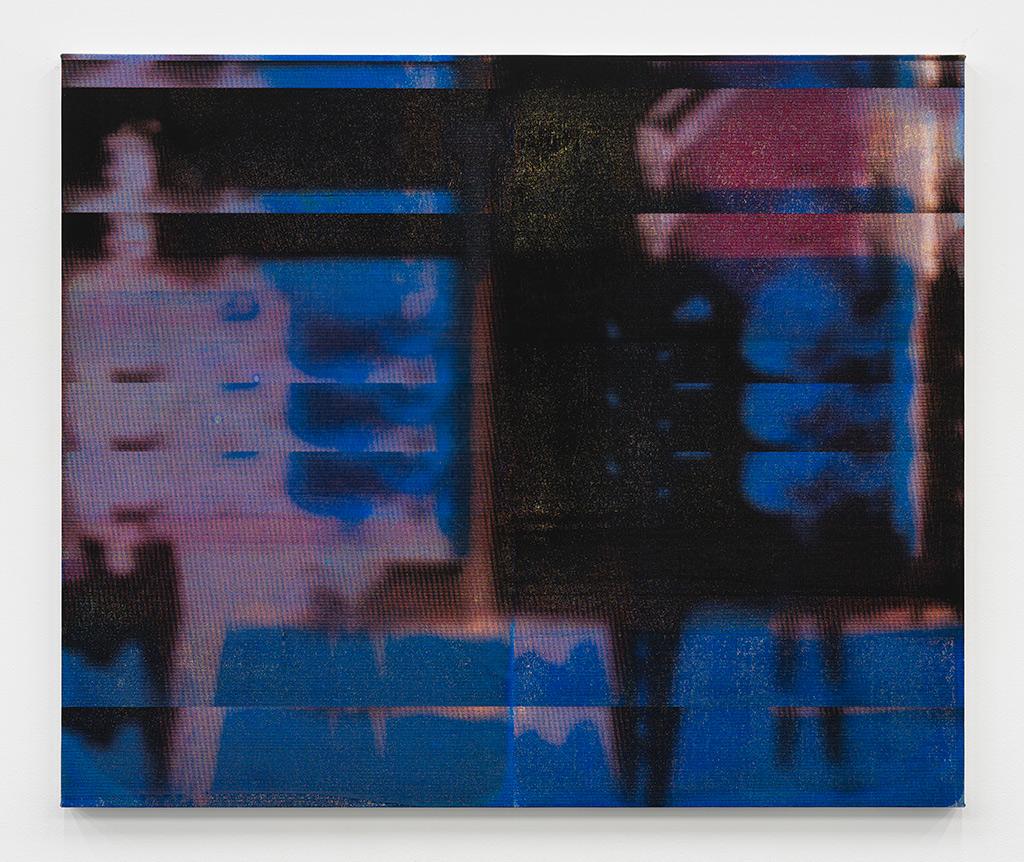
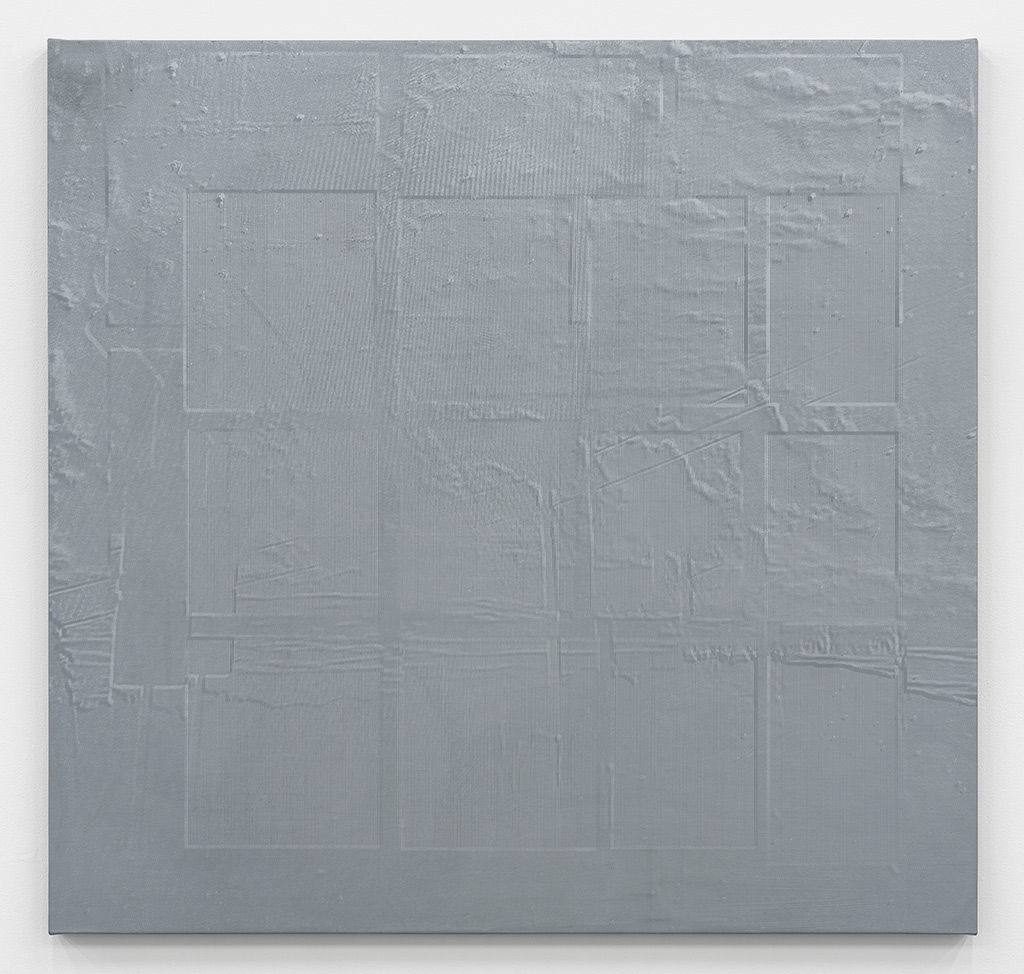
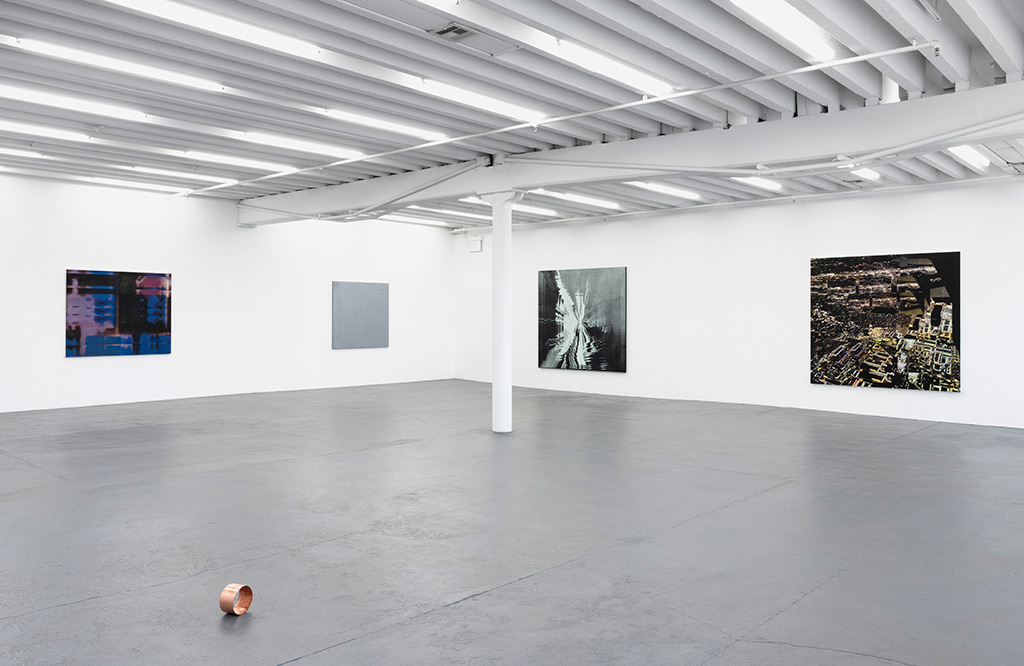
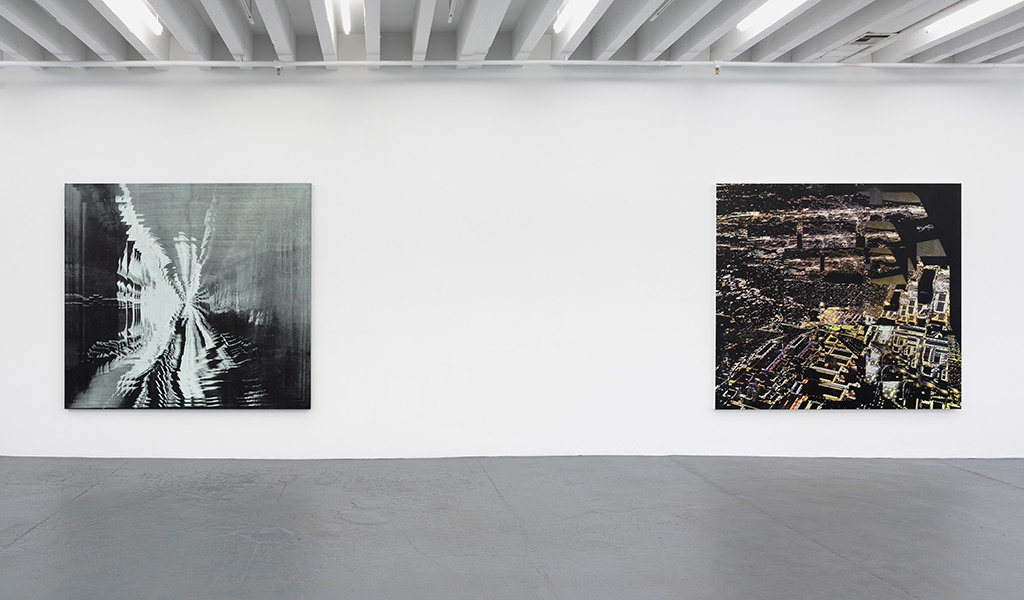
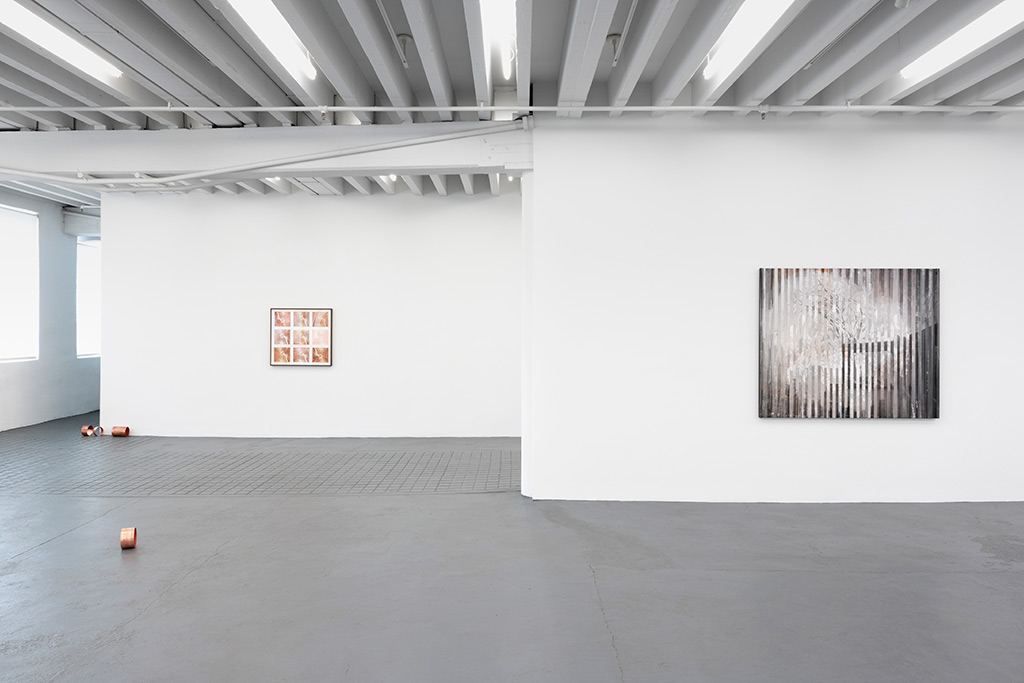
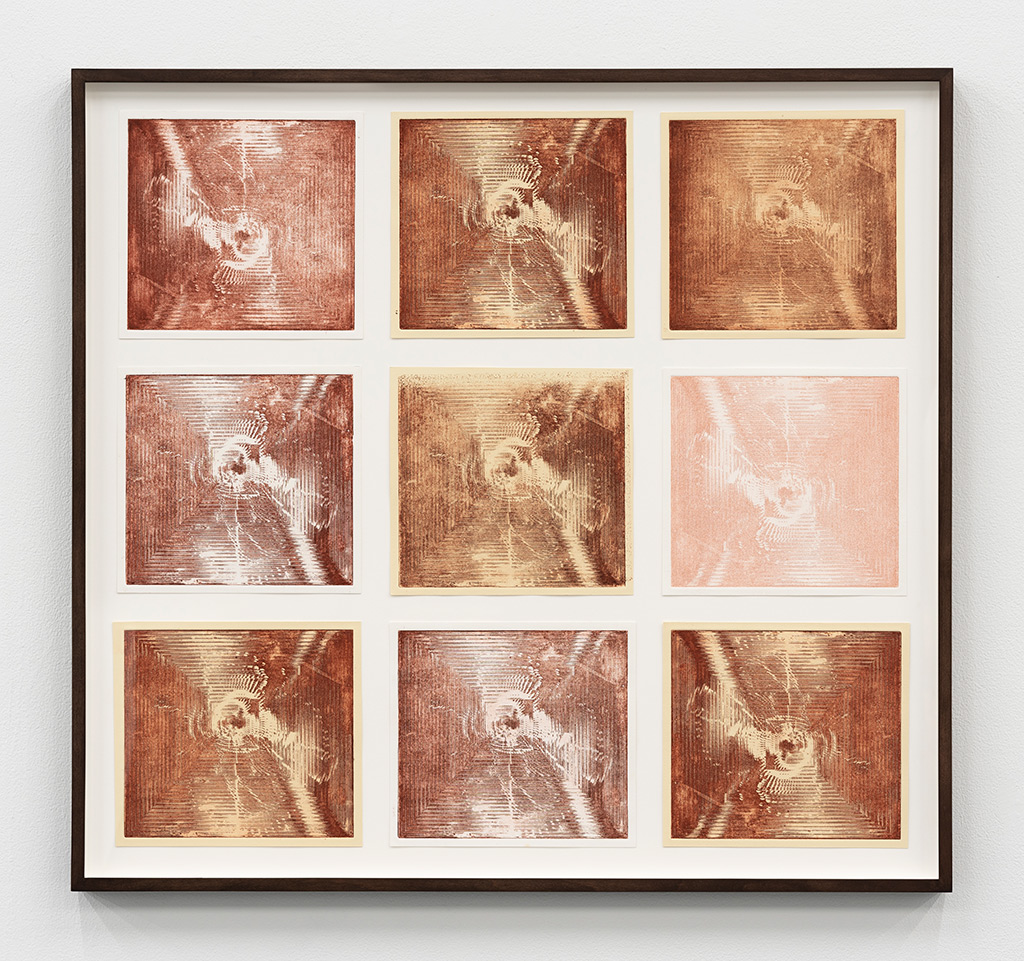
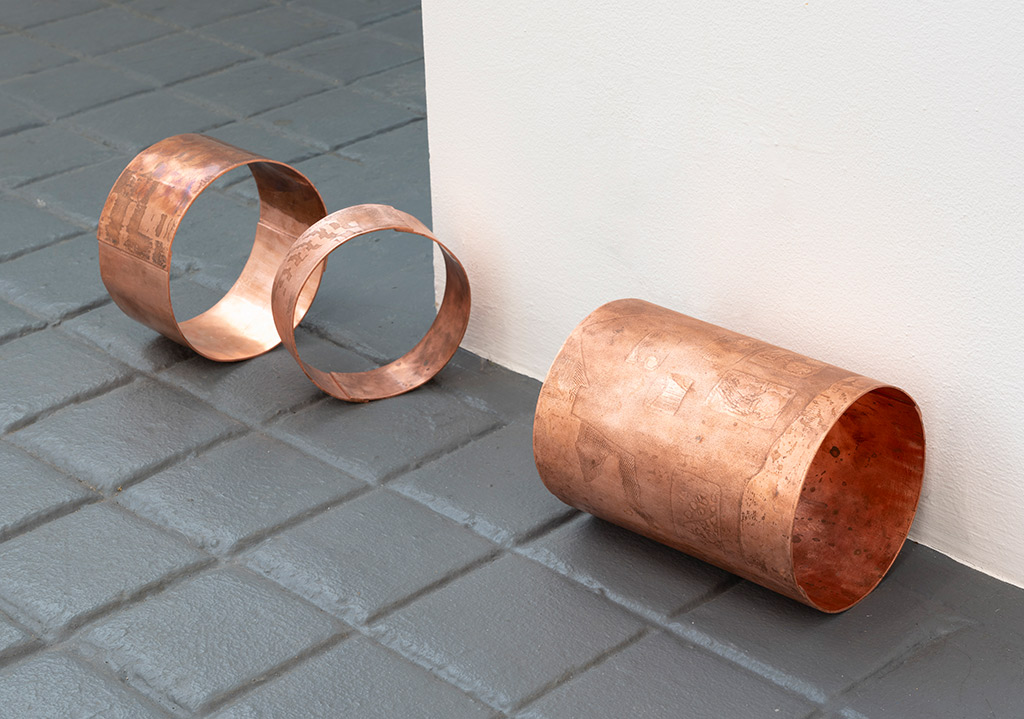
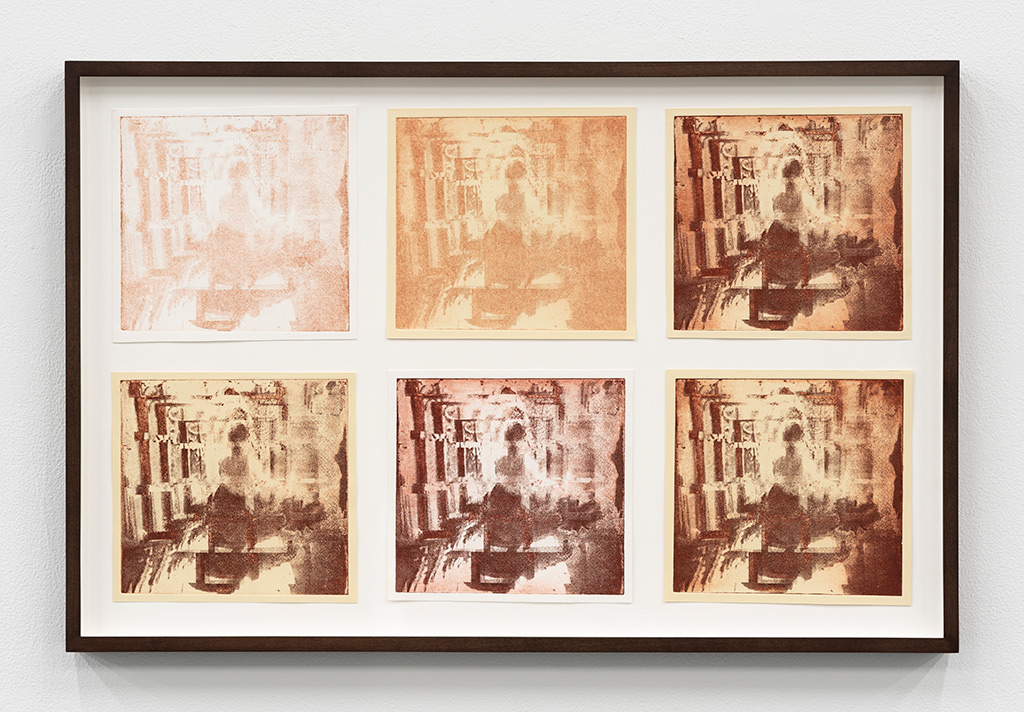
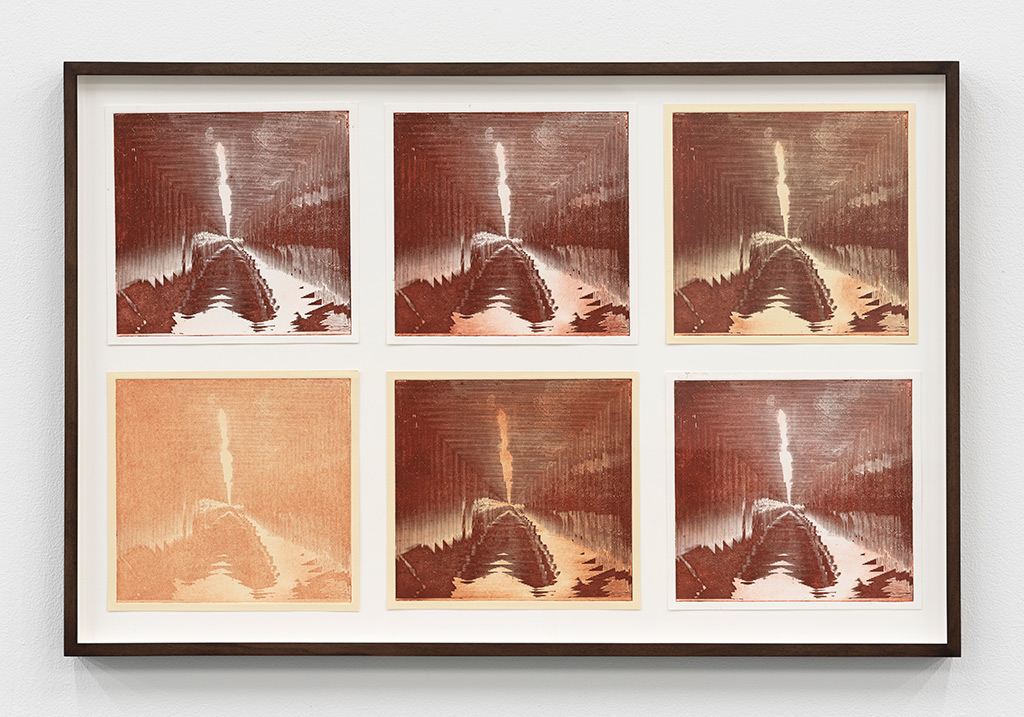
Miguel Abreu Gallery is pleased to announce the opening, on Friday, May 15, of Blast Beat, Kate Mosher Hall’s second solo exhibition at the gallery. Comprised of ten new silkscreened paintings alongside a group of etchings and several metal elements, the exhibition will be inaugurated with a performance by the artist on opening night.
Organized by Andrew Lampert, the late Ken Jacobs’ short video, Other Urban Lives, from 2023, will be screened on a loop in the small entrance gallery, as part of The Whole Shebang: Celebrating Ken & Flo Jacobs, a city-wide tribute to the two giants of experimental cinema.
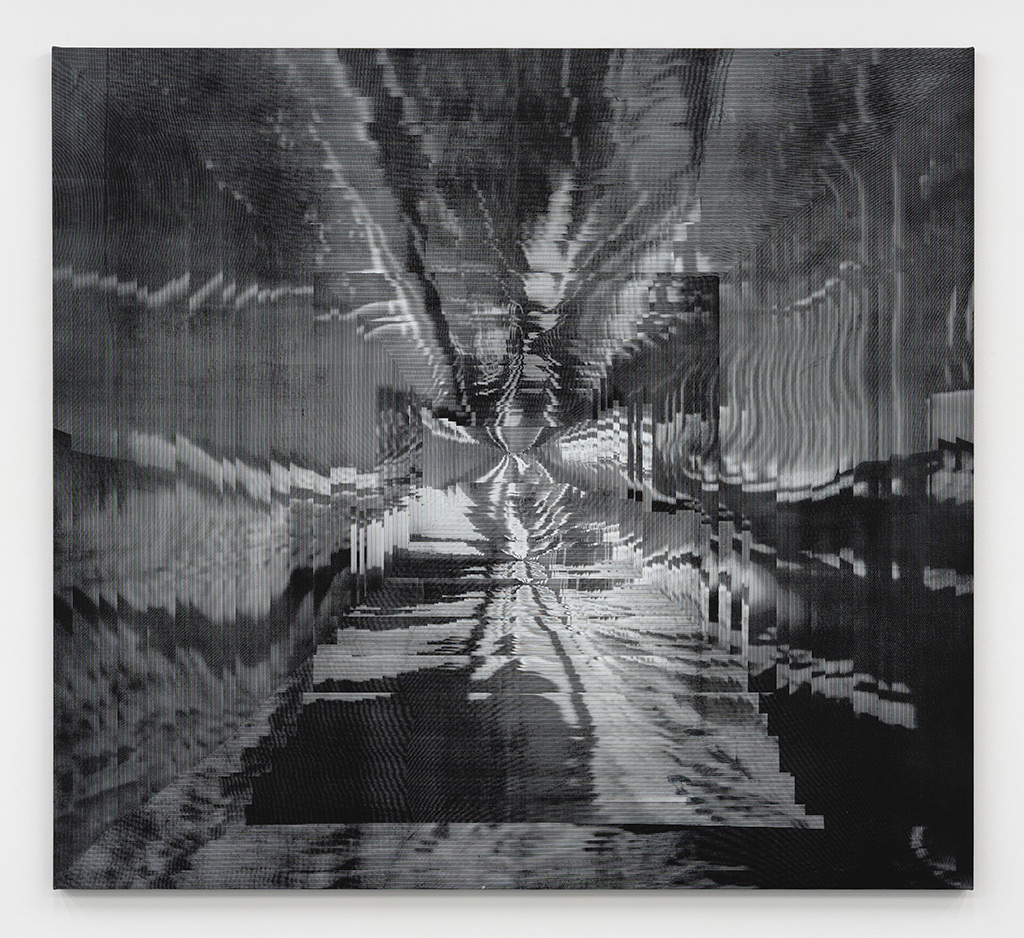
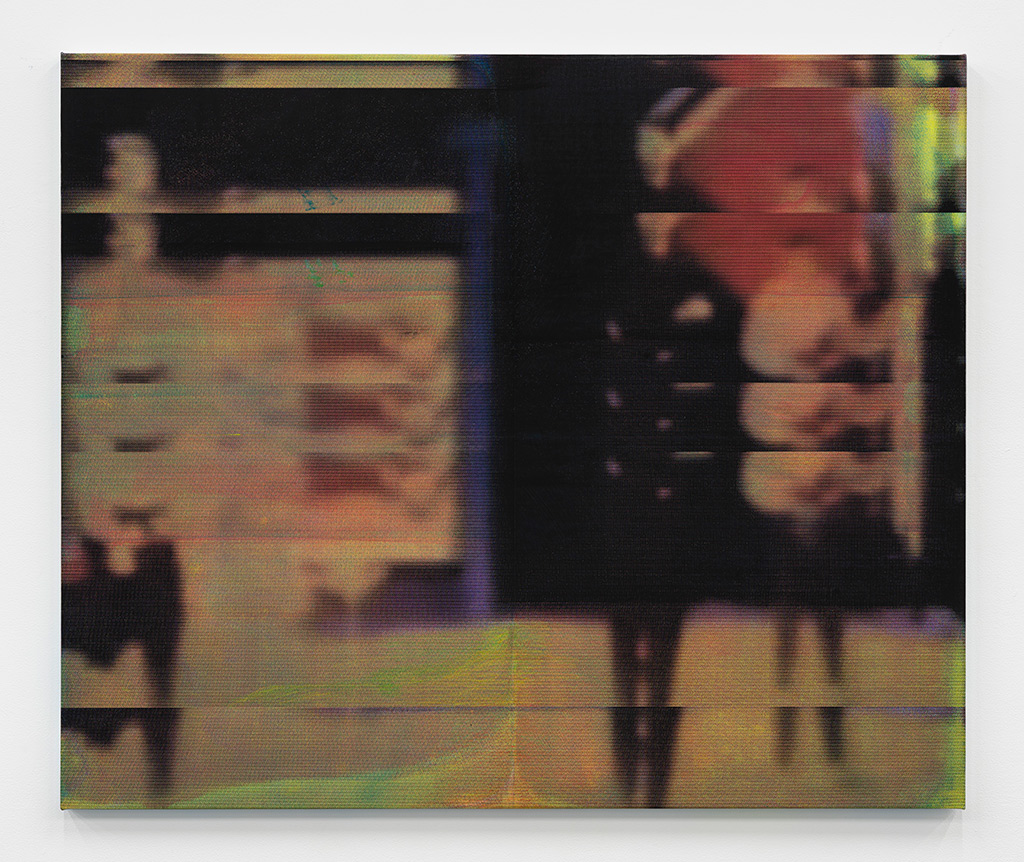
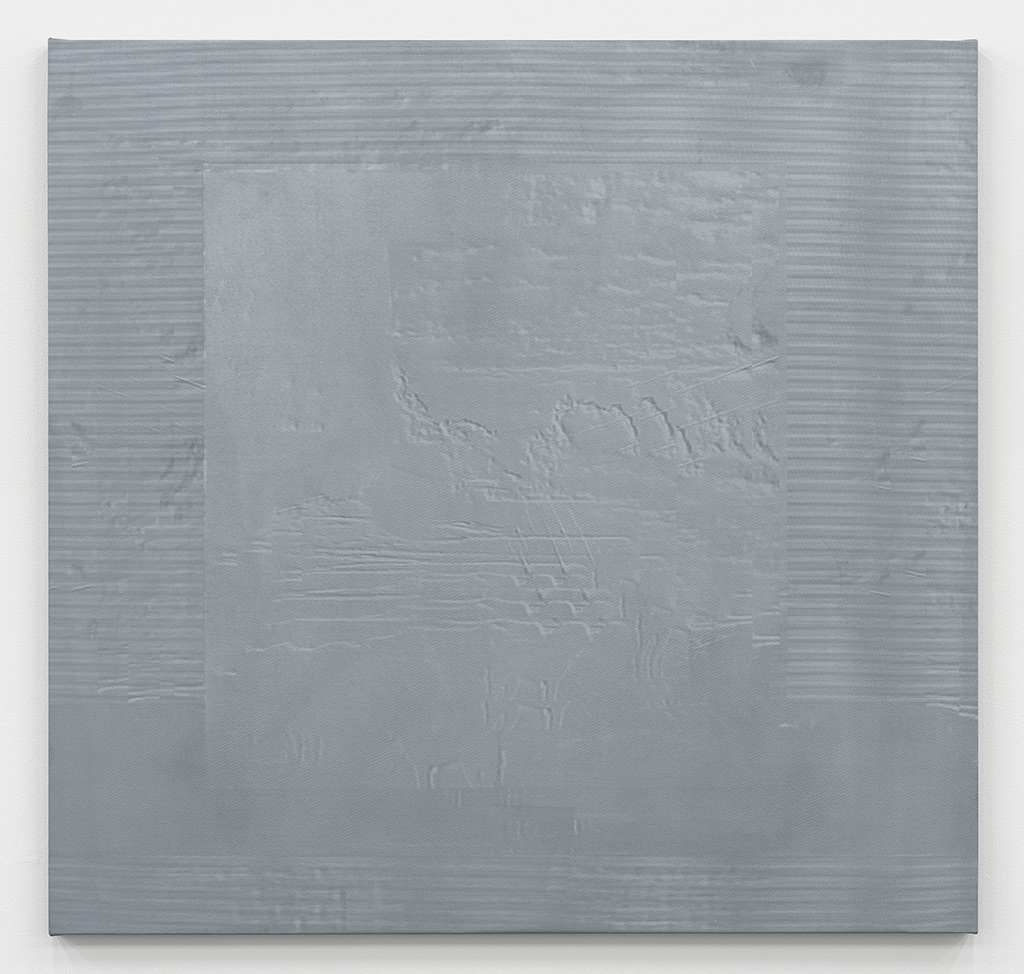
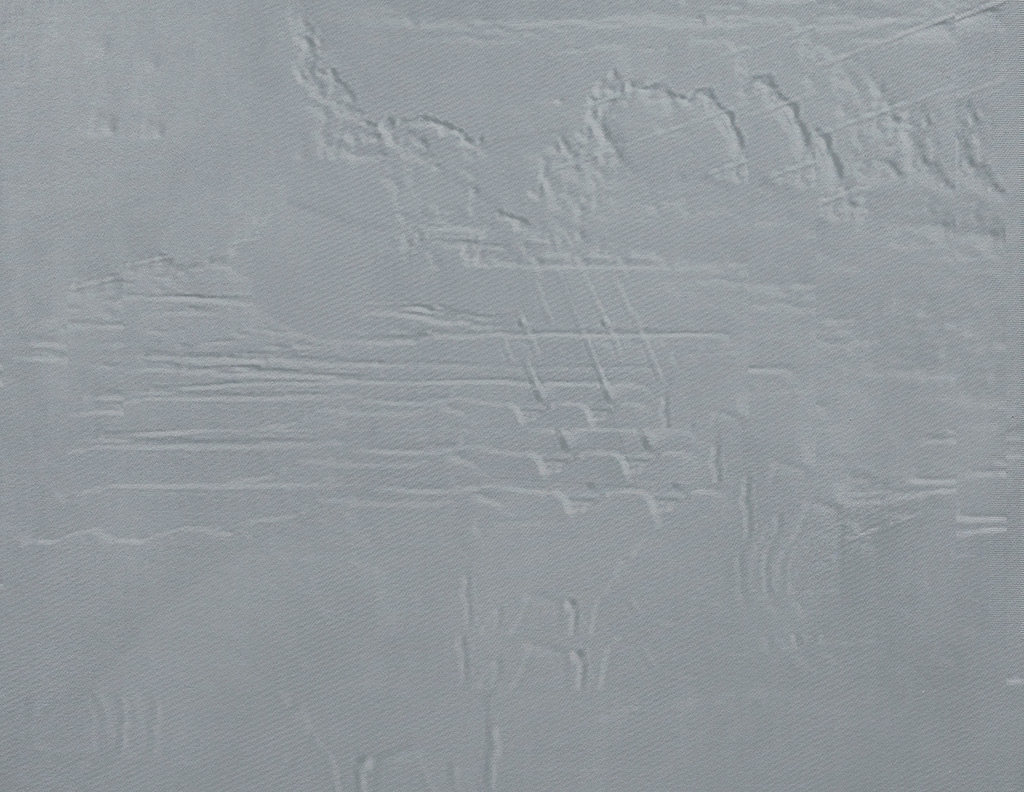
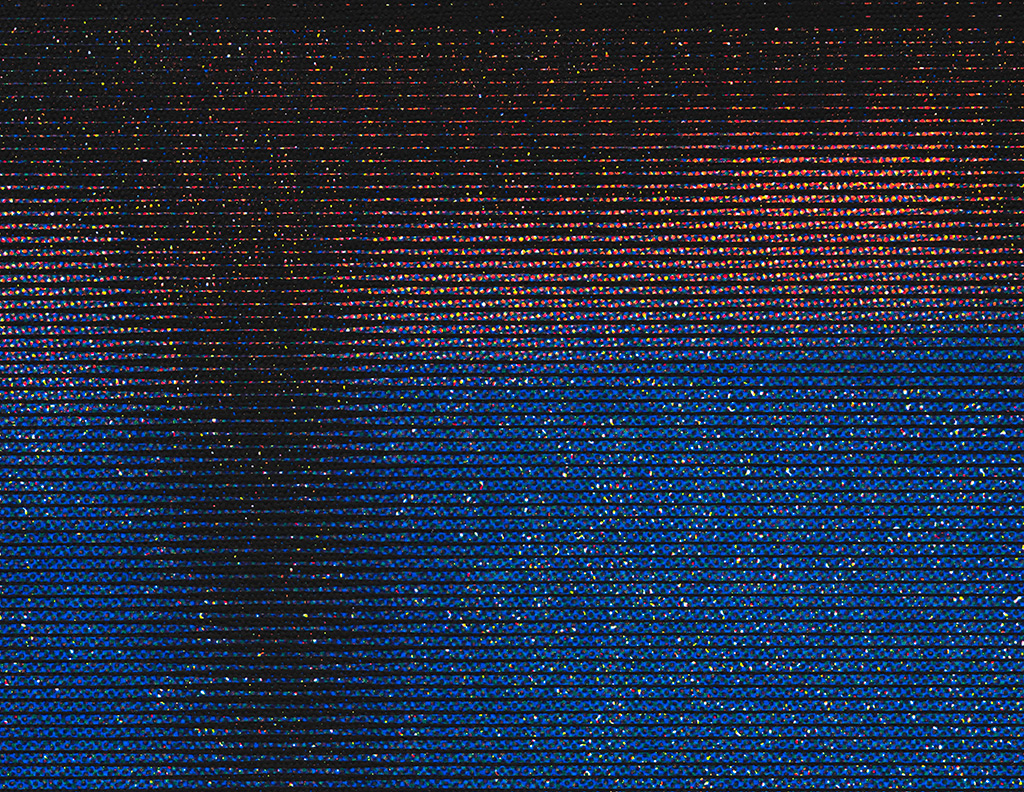
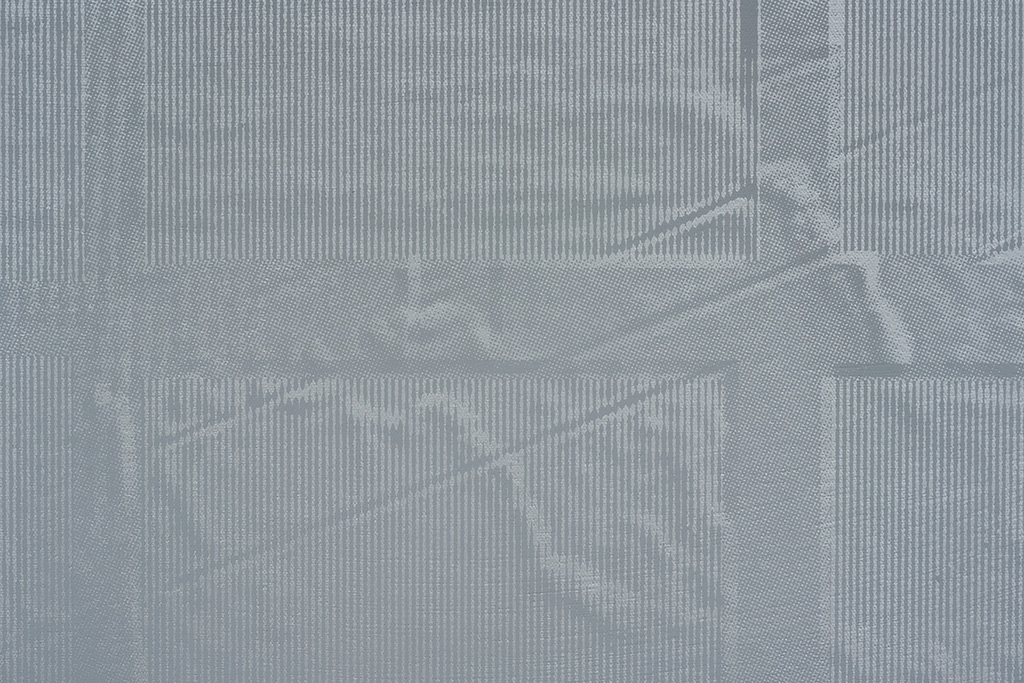
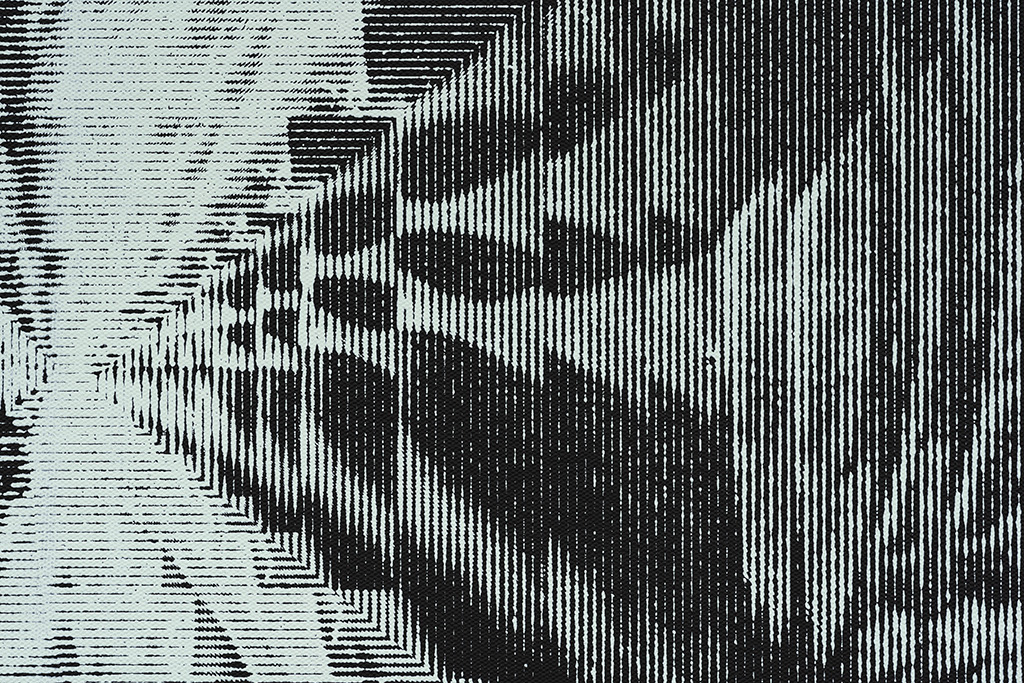
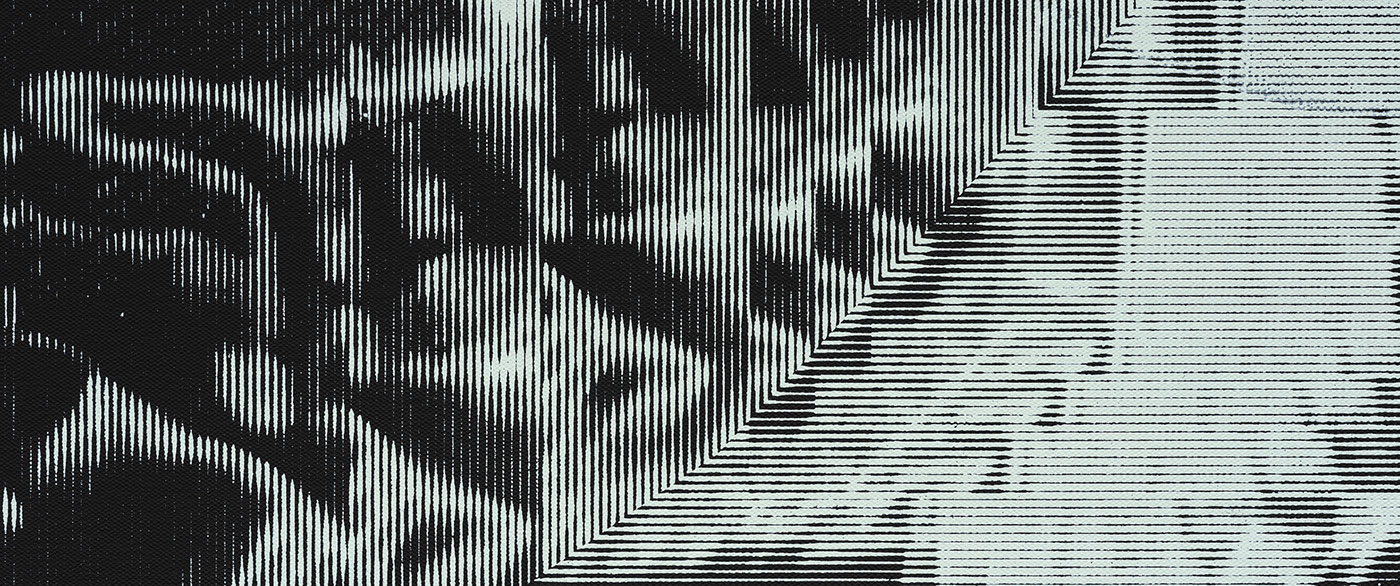
Kate Mosher Hall’s new body of work takes its title from the drummer’s blast beat—a high-density rhythmic structure associated with hardcore punk and grindcore, wherein meaningful signals crescendo into a mass of sensation. Employing her method of layering multiple image-making regimes—photography, digital composition, photo-etched copper plates, intaglio prints, and silkscreens—and multiple screens within one image, Hall upends the classical notion of the spectator as an autonomous ‘maker-of-meaning’ looking before a virtual world. The viewer is rather folded into an immanent process of image creation, the digital screen through which we encounter contemporary art objects churning another recursive movement. Each interface imposes its own logic to produce flickering moments of structural slippages.
“Rather than the world being absorbed into the screen, the embossed texture of the offset silkscreen reverses the logic,” says Hall. “The digital comes out into the physical, and the computer emerges into the body of the painting.” Extending the formal techniques of 1960-70s video artists who intended to program digital apparatuses to work against themselves, Hall’s spatial montages manipulate one source image (a dog standing atop a mountain at sunset, a bird’s-eye view from an airplane) and submit it to obfuscation tactics resembling glitch artifacts. By toggling between the analog and digital, object and process, communication unfolds through a series of feedback loops (mis)registering varying bandwidths. The results are maniacal images that produce the feeling of standing within a hall of mirrors.
For Air, Hall collaged a photograph captured during an aerial descent into Los Angeles at night into a grid-like formation using multiple frames. These stacked screens, sites of projection and introjection, familiarize the surveillance operations of the American Semi-Automatic Ground Environment (SAGE) in the 1950s, to whom we owe the existence of the modern computer screen. “The illuminated city assumes a formal resemblance to a computer motherboard,” notes the artist. Transcoded into a multi-layered silkscreen composition, the memory-image splinters into chromatic subpixels and linear vectors spangling the canvas like digital debris, or what appears like cosmic dust.
Affirming the electrifying beauty of technical traces, Hall abandons memory as an originary presence, or as an image that represents “time embalmed and change mummified,” as in Bazin’s photographic realism. In her paintings, memory is always post-produced. Hall reorients our attention from the search for a lost object to the perceptible madness, or structural delirium, that conditions our contemporary life.
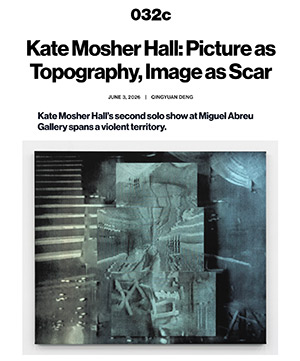
PRESS
Kate Mosher Hall (b. 1986, Los Angeles) lives and works in Los Angeles. She received her MFA from UCLA in 2020, and her BFA from the California Institute of the Arts in 2013. Solo exhibitions include Never Odd or Even, Hannah Hoffman Gallery, Los Angeles (2024); Big View, Miguel Abreu Gallery, New York (2023); The Reminder, curated by Kristy Trinier, Audain Gallery, Simon Fraser University, Vancouver, Canada (2023); Offset, Tanya Leighton, Berlin (2021); Without a body, without Bill, Hannah Hoffman Gallery (2021); LOQK, Artist Curated Projects (2019); and Wind Breaker, Phil Gallery (2019), all in Los Angeles. Notable group exhibitions include Kate Mosher Hall, Fionna Connor, and Bedros Yeretzian, Coastal Signs, Auckland, New Zealand (2023); Something or Other, Galerie Maria Bernheim, Zurich (2023); The Painter’s New Tools, curated by Dean Kissick and Eleanor Cayre, Nahmad Contemporary, New York (2022); and K as in Knight, Helena Anrather, New York (2021). Her work is in the permanent collections of Fondation Carmignac (France), Kistefos Museum (Norway), the Los Angeles County Museum of Art, The Museum of Contemporary Art (Los Angeles), Rollins Museum of Art (Winter Park).
______________________________
Miguel Abreu Gallery is pleased to announce the opening, on Friday, May 15, of a presentation of Ken Jacobs’s Other Urban Lives. This exhibition marks the final part of The Whole Shebang, a retrospective program organized by Andrew Lampert across fourteen museums and cinemas in the city.
The majority of Ken Jacobs’s captivating late digital works revolve around images photographed with a small 3D camera in his longtime lower Manhattan neighborhood. Reworking these photos with his assistants (in this case, artist Antoine Catala as editor) into what he called “eternalisms”—strobing loop-like images that, among other things, oscillate between positive and negative—the artist transformed all too familiar and easily overlooked street scenes into cosmically-charged, intensely throbbing moments of pure euphoria. In Other Urban Lives (2023), a tree stump becomes an undulating world unto itself and the limits of space are stretched beyond easy recognition. The result is a spectacular form of 3D that can be seen without the aid of glasses.
“Decades ago wife Flo and I got into live projection. We found the eternalism. There was and is no way to seek it out or even to imagine it. Unimaginable before experiencing it, it befell us as we were working two side by side stop-motion 16 mm projectors, investigating close frames on two prints of the same film, a spinning shutter upfront alternating and visually melding the two prints. The onscreen melding of the two images—and resulting illusion of depth—could be recorded and played back, but only after switching to video and to the computer did the precise construction of eternalisms become possible.
The picturing on the screen of things in deep space can be seen without special glasses by anyone with two working eyes or—miracle—even a single eye and just as well. In video, the momentary blackness created by the spinning shutter is replaced by an interval of opposite colors on the color wheel.
Instead of projecting adjacent film-frames my videos are based on the left and right frames of a twin-lens stereo still-camera but adjacent film-frames may return in the future. Moments! That do not repeat as much as prolong, eternalisms, a name to trip over.”
— Ken Jacobs
Ken Jacobs (1933–2025) is widely regarded as one of the most singular and significant moving-image artists of his generation. His substantial contributions to both global cinema and downtown arts culture are completely incomparable. In a tribute published in The New York Times upon his passing in October, 2025, critic Manohla Dargis noted that “Jacobs made movies that changed your ideas about what cinema is and could be. He expanded your sense of the art and your horizons, lit up your brain and blew your mind.”
A native New Yorker raised in the then immigrant neighborhood of Williamsburg, Jacobs initially studied art as a painting student of abstract expressionist Hans Hoffman, however he quickly progressed to a more flexible canvas, cinema. His acclaimed early films—including Star Spangled To Death (1957/2004) and Blonde Cobra (1963) starring performance art trailblazer Jack Smith— are major works of the 1960s underground film movement, for which Jacobs became a central figure. Jacobs’s seven decades worth of restless activity resulted in over forty 8mm, 16mm and 35mm celluloid films, however these represent only one substantial part of his prolific output. Working in partnership with his wife, Flo Jacobs (1941–2005), the couple staged numerous innovative shadow plays and performances before embarking on their groundbreaking series of “nervous system” works in 1975. The unparalleled pieces that they presented at venues around the world employed two 16mm projectors to concoct unfathomable stereoscopic imagery. The duo pioneered the arena of live film performance, and in the late 1990s they shifted their attention to the “nervous magic lantern,” which was another self-invented system that produced even deeper 3D abstractions. In 1999, Ken moved into the burgeoning realm of digital video, the result of which was an unprecedented late career explosion that once again cemented his position as one of his generation’s most expansive multimedia innovator. It is Jacobs’ total dedication to the multiple possibilities and mutations of the moving image that binds all his seemingly disparate modes into a brilliantly cohesive whole.
A recipient of multiple awards from the National Society of Film Critics, numerous grants (Rockefeller, Guggenheim, Creative Capital), and festival prizes, Ken Jacobs has been called “one of the most extraordinary unknown personalities in the history of American movies” by critic J. Hoberman. His 1970 film Tom, Tom, The Piper’s Son was placed on the National Film Registry of the Library of Congress. The subject of multiple retrospectives and decades worth of exhibitions, his works are held in public collections such as the Museum of Modern Art, Anthology Film Archives, and Centre Pompidou among others. A Distinguished Professor of Cinema at SUNY Binghamton, where he established the film department and taught for more than 30 years, Jacobs’s generous influence has deeply impacted several generations of moving image artists. He was the subject of the multi-contributor book Optic Antics: The Cinema Of Ken Jacobs (Oxford University Press, 2011), and is the author of a collection of writings, lectures and statements posthumously published this year, Ken Jacobs: I Walked Into My Shortcomings (The Visible Press, 2026).